Wednesday, May 10, 2017

Waking Lions Will Keep You Awake


Product Details


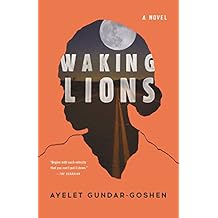
I can't remember if it was the arresting cover or Maureen Corrigan's review on NPR last month that initially drew me to this novel by Israeli writer Ayelet Gundar-Goshen but between the excellent translation from the Hebrew and the storyline, "Waking Lions" did keep me reading half the night. Gundar-Goshen, in an interview in "The Guardian," admits to her left leaning politics and disgust with the current Israeli leadership. She is also a psychologist who marries her politics and her profession beautifully in this thrilling exploration of Israel's refugee crisis, one you may not be familiar with.

Dr. Eitan Green is still chafing after having been transferred to the barren, dusty city of Beersheba from his sparkling clean neurosurgery suite in a Tel Aviv hospital after having fallen out with his supervisor. Frustrated by the lack of supplies, the long hours, and his feelings of being an inadequate provider for his wife and two boys, Eitan takes off one night in his SUV, music blaring, tires speeding and spinning in an orgy of childishness. The sudden thunk barely registers at first but the full moon cannot hide the fact that Eitan has run down another human being. In scarcely an instant the doctor examines the faceless Eritrean immigrant, concludes that he cannot survive his injuries, and heads home deciding that no one will look for the killer of one more Bedouin immigrant. 

How he could think that the hit and run would not have consequences (his wife, Liat, is a well-respected police investigator) is beyond us as readers. Or, is it? Of course, that is the question that we must ask ourselves. Yes, this plot device has been used before in literature to excellent effect, I'm thinking of Boyle's "Tortilla Curtain," or Lawrence Osborne's "The Forgiven." Gundar-Goshen adds nuance and ambiguity to our reading by painting Eitan as an arrogant physician who often doesn't "see" his patients and Liat as an officer known for being an astute observer.

It's not until the African woman arrives at his door with his wallet in her hand that Eitan realizes he will not easily be let off the hook. Sirkit is the hit and run victim's wife and she wants something that only Eitan has, not his money but medicine and his ability to treat the hundreds of Eritrean immigrants who live in camps outside the city in squalor. He dares not refuse her.

"Oh what a tangled web we weave when first we practice to deceive." Oh Shakespeare, how well you understand our humanity! As Eitan struggles to do the bidding of his blackmailer, keep up rounds and surgery at the hospital, and avoid awkward questions from Liat who is now investigating the Eritrean's death, he becomes mired in debilitating guilt and shame. Yet he also faces a chance at redemption. Working side by side with Sirkit, once just another anonymous black face but now a person with a life, a past, feelings, losses, grit, Eitan may find a way to become a better, more generous human being. Will he?

Tuesday, May 2, 2017

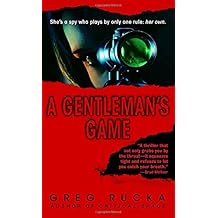
Nothing Gentlemanly Happens in Greg Rucka's A Gentleman's Game

Product Details
 
Readers who have been following me for a long time know that I have a penchant for spy thrillers that probably stems from hours of watching those wonderful old cold war TV shows of the sixties like Mission Impossible or my favorite, The Man From U.N.C.L.E. Then there was John LeCarre. After that I discovered the British TV show MI-5 and became addicted. So when my friend Don, a graphic novel aficionado, told me about Greg Rucka's Queen and Country series, I had to give it a try.
 
Originally developed as a comic, three books resulted in this series, one of several that Mr. Rucka, who must write 24/7 to keep all the balls in the air, has penned over the past fifteen years. http://www.gregrucka.com/wp/ His versatility and output is phenomenal. But what both Don and I appreciate about him is his ability to craft formidable, believable female characters with guts and heart.
 
Tara Chace, a brainiac with a knack for languages, was chosen directly out of college to work for Her Majesty's Secret Service. But there was no way she was going to be satisfied stuck behind a desk interpreting code. She wanted the hand to hand combat training, excelled at rifle and pistol work, and begged to be placed in "special services." Think James Bond without the swagger.
 
By virtue of the job description, trained assassins seldom stay on the job for long, and within eighteen months Tara is the head "minder" of three, people whose lives are expendable to the top brass, who keep a "go bag" with a change of clothes on hand at all times, and who are stealthily parachuted into war zones knowing that if they're caught they will may be acknowledged by their mother country.
 
So it is that after London's underground was attacked by terrorists Chace is called in to get vengeance. The problem is that professionals, especially women, make easy enemies along the way and she has raised the ire of a competing organization. When more than one country is involved in negotiations - in this case the CIA and Israel's Mossad - things get even dicier.
 
It's no surprise that Rucka writes for TV and film as well. His narrative style is rapidly paced. You can read this book in a sit down or two and visualize it all on the big screen at the same time. He attends to every detail with precision and if his characters seem a little jaded, well you get it. You can be pretty sure that all the machinations taking place behind the scenes, the not so secret meetings between various factions of the secret services, the handlers and the government, are all too true.
 
"A Gentleman's Game" is the first of the three Tara Chace novels and I guarantee I'll be squeezing the other two in, between assignments from "Library Journal." It's smart, sexy, and timely, addressing the scourge of jihad without damning Islam.

Thursday, April 27, 2017

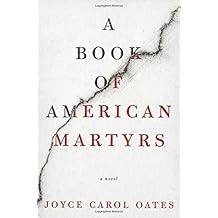
A Book of American Martyrs

Where have I been you might ask (in case you check in every week to see what I'm reading). Insert smiley face emoji here. Well, I have been locked in the head of Joyce Carol Oates, a place that, if you are familiar with her fiction, can be most uncomfortable. "A Book of American Martyrs" comes in at an astounding 755 pages and yet, if you can convince your book group members to buckle down and dig in, this saga would lend itself to a deep discussion.

Product Details

I've read many blurbs and reviews of this novel and they all seem to propound that the focus of Oates' book is abortion. That is really a gross oversimplification of a work that has deeply nuanced things to say about pro-choice/pro-life stances, the death penalty, equality in marriage, responsibility in parenting, forgiveness, and oh yes, boxing. Those of us who have met Ms. Oates at various conferences will remember that she has an inordinate interest in the sport of boxing and manages to display her knowledge very credibly in the final third of the book.

It's no secret that the two men at the heart of this novel are deeply devoted to their beliefs. Dr. Gus Voorhees is a surgeon who performs abortions at women's clinics in the poorest parts of the mid-west, Michigan and Ohio, going where he is most needed to help women who are faced with the most gut-wrenching decision they will likely ever have to make. Gus is a husband and a father of three.

Luther Dunphy is a born again Christian, a member of the Army of God, an organization that pickets women's clinics hoping to inhibit the slaughter of innocent babies. He believes that God has personally called to him. Voorhees is the name of a doctor on a hit list. Dunphy has a shotgun. He too is a husband and a father of four.

On November 2, 1999, the two men's paths will cross but the ripples of that fateful meeting will span another decade and a half as Oates pivots between the two families as they cope (or not) with the violence that has upended their lives. To illustrate just how complicated the abortion issue can be, Oates introduces readers to a mother who chose against abortion but ten years later physically abandoned her son. Another mother in China gave her daughter up for adoption. That girl is adopted by the Voorhees family. The widows disappear from their children emotionally, finding solace in work or in religion. The siblings become estranged as they try to distance themselves from their past. There is a ferocious amount of loss in this thought-provoking, weighty tome.

Reading the chapters that address the workings of the death penalty, the stays, the re-trials, the solitary confinement before the final sentence, hammered home for me the reasons why I could never condone capital punishment. Ms. Oates writes as if she'd been on death row herself and one doesn't doubt for a second the authenticity of the thoughts running through the heads of the guards or their prisoners. As I mentioned, there's lots to discuss here.

But ultimately I came to the conclusion that this book is about forgiveness and growth. There were so many times during my reading when I wondered "where is she going with this?" When the "ah ha" moment arrived I was so relieved that I wanted to cry. So, yes, I do think the book could have been whittled down a bit but hey, does anyone get to edit a writer of Oates' reputation? Probably not. And do we really want to excise one word from a writer so capable of taking you along on such a roller coaster ride? Probably not.

Friday, April 14, 2017

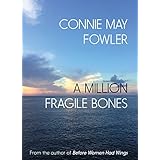
Connie May Fowler's Cri de Coeur For the Environment

Product Details

Well, my library was taking its own sweet time adding this new book by Florida writer Connie May Fowler to the collection so I got my copy by going to the source. I knew I would want to write about this very important memoir for my radio program, The Florida Book Page. I messaged the author through her Facebook page (https://www.facebook.com/conniemayfowler?fref=ts) and I had the book in a couple of days. My radio review won't be broadcast until next fall and I sure don't want you to wait that long to put it on your "to read" lists.

Connie May Fowler has a beautiful soul, one that has been tested over the course of her life too many times. She novelized her neglected childhood, the chaos and hopelessness, with the Oprah pick "Before Women Had Wings," and wrote a harrowing memoir of an abusive relationship in "When Katie Wakes." But there is nothing fragile about the Connie May Fowler who resettles at Alligator Point, her own tiny piece of heaven on the pristine shores of Florida's panhandle.

There are many ways to handle grief. Each of us finds our own path. But this book called to me because for her, and for me, nature, our mother earth, has always been the way forward. A writer, a loner, Ms. Fowler lived with her animal family - each dog has his/her own outsize personality - in a beach house on the Gulf of Mexico, a body of water that generously deposited daily gifts to her door and offered healing that she would never have found anywhere else.

Fowler's writing is so fluid, so luminous, that every wondrous day of discovery that she describes feels as though it's your own. Each bird, starfish, seahorse, turtle nest is a wonder. Each day with lines written is our accomplishment as well as hers. Love arrives, gains trust, stays. Nature's treasures shared seem twice as precious. And then it happens.

On April 20, 2010, the BP oil rig, the Deepwater Horizon exploded in the gulf. If you live here in Florida you may remember being glued to the TV as we watched in horror. Scientists worked feverishly to cap the well as months passed and the coasts of five states were despoiled with tar balls and dead sea creatures. In the end, 210 million gallons, an incomprehensible figure, spewed into the turquoise home of our fragile marine life.

In agonizing prose, Ms. Fowler takes us through the days, weeks, and months that she and her husband Bill activate neighbors, write letters, and battle the Army Corps of Engineers, all the time waiting for the now discolored sea, smelling of death, to disgorge its victims on their front lawn.

"A Million Fragile Bones" is both beautiful and horrible, a desperate cry to the world. Greed, corruption, and money were the motivators behind the oil spill. We may never know the extent of the damage but there's no doubt that it could be decades before mother nature begins to heal herself. If you have ever found solace in the sea, or the Great Lakes, the Chesapeake, the Hudson, the Cape Cod National Shore, then this book is a must read. Add it to your list today.


Tuesday, April 4, 2017

Mark Billingham's Rush of Blood Gave me a Rush

I often forget how much I've always loved murder mysteries. I spend so much time reviewing literary fiction for Library Journal and reading Florida-centered books for WGCU that I've had to practically give up my old genre of choice, favorites since my mom first introduced me to the Mason Library in Great Barrington, Massachusetts. A few weeks ago I was browsing some website or another looking for novels set in Florida and discovered a Brit named Mark Billingham. http://www.markbillingham.com/Happy day!

Product Details
 
Set in Sarasota - which I needed - and in the UK - which all great murder mysteries need - this book filled the bill, introduced me to some disagreeably icky tourists, and kept me thinking, though I did suss out the murderer before the denouement.
 
Three couples, Angie and Barry, Sue and Ed, and Dave and Marina are vacationing in Sarasota. All are hanging out at the Pelican Palms pool sipping G and T's, when one of the group overhears the distinctly British accent of another. Conversation ensues and, sure enough, they are all from the same general area of Great Britain just outside of London. Small world.
 
Of course says Ed, the know-it-all of the group, they must all eat together one evening. And that evening turns into every evening, then every day too, and pretty soon they are an inseparable posse, though they have little in common and wouldn't give each other the time of day back home.
 
But on the last full day of vacation, sated with sunshine and beer, the group is suffering from a case of collective guilt. A girl has gone missing. Amber-Marie, born with some obvious learning disabilities, has been enjoying the resort with her mom. For two weeks she's been chatting up the Brits, coloring in her books, and being feted with a little more attention than she'd normally get, an ice cream here, a candy bar there.
 
Now the place is crawling with cops, the Brits have flights to catch and hey, they didn't really know her did they? Just a girl with a big smile and a trusting manner but not their problem, right officer? Cursory statements are given and rental cars returned. Normally they'd never see one another again but they didn't reckon on Angie, a lonely housewife without enough to keep her busy, and with a sullen husband who doesn't like to socialize.
 
Angie straight away decides to entertain the other two couples, keep the friendship going, attempt to stay in vacation mode. Plus, she's an internet fanatic. From across the pond she's been following the investigation into the girl's disappearance and has convinced herself that everyone will want to be apprised of each new bit of scuttlebutt. Maybe, maybe not.
 
Characterization and conversation are Billingham's forte. Each person is annoying in his own way but still sympathetic, insecure, and terribly human. Their conversations are quotidian but their silent musings are delectably interesting. Sarasota's finest, Detective Jeff Gardner is imbued with heart and compassion while his cohort in London, ambitious DCI in training Jenny Quinlan, is a pure delight. The murderer's voice is coldly terrifying.
 
If you're in the market for a smart, suspenseful mystery sprinkled with enough red herrings to keep you guessing then I recommend "Rush of Blood." In fact, I'm placing holds on a few of his other novels the minute I finish typing.