Sunday, June 10, 2018

Social Justice Issues Front and Center at Book Expo

No matter which conference you're attending you can always count on Carol Fitzgerald of the Book Reporter (https://www.bookreporter.com/) to host lively panel discussions and this year's  Book Expo was no exception. First time authors were especially powerful in their Q & A sessions with Carol as she dug deeply into issues of racism, poverty, and the downsides of 24/7 social media exposes. No, not everyone is a journalist and sometimes what we see and film is not what's actually happening right in front of our eyes.

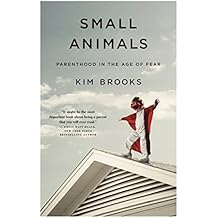
Small Animals: Parenthood in the Age of FearSuch was the case for Kim Brooks who spoke about her book "Small Animals," in which she describes her life being turned upside down by a stranger who posted a video of her leaving her child in the car while she ran into a drugstore to pick up a prescription.

While admitting it was wrong, objectively, she opined that in today's internet age we as a people are so quick to judge without engaging. She wishes the stranger had just approached her. Instead the police were called, her vehicle was confiscated, her custody of her child was called into question in a series of cascading developments that could have been avoided.
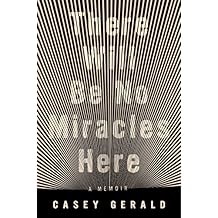
There Will Be No Miracles Here: A Memoir


Casey Gerald's memoir, "There Will Be No Miracles Here," will be published in October. Raised in poverty, earning a football scholarship to Yale, Mr. Gerald would seem to be living the American dream when, in fact, it was anything but. His passionate presentation spoke to the systemic racism that underlies every success story as he has examined what it means to get ahead and at what cost to your identity. This one appears to be a must-read.

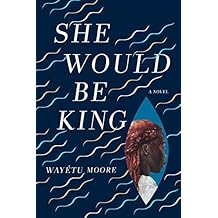
Another exciting debut is forthcoming from the delightful Weyetu Moore who's written a novel about the founding of Monrovia, Liberia, as seen through the eyes of three disparate characters. "She Would be King" tells the tale of Gbessa, an African refugee left for dead after a snake bite, June, an enslaved woman who escaped a plantation in Virginia, and Norman, a mixed-race child of a British colonizer on Jamaica, as they use their wits and talent to bridge the gap between the various indigenous Liberian tribes and the new African-American settlers seeking a place to call home. Look for this in September.She Would Be King: A Novel

And for those of you who may be attending the American Library Association conference in New Orleans, do look for editor and all around book expert Sarah Weinman, who will be touting her first non-fiction, true crime book based on the life of Sally Horner, the young woman upon whom Nabokov based his infamous "Lolita." According to Weinman, the famous author never acknowledged how much he knew about the 1949 kidnapping, in Camden, New Jersey, of the eleven-year-old Horner and how it informed his novel. Weinman brings a feminist outrage and an editor's eye to the facts of Horner's case and that of so many other young girls who have disappeared at the hands of pedophiles or rapists, never to be seen again.
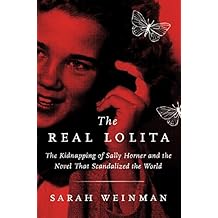
The Real Lolita: The Kidnapping of Sally Horner and the Novel That Scandalized the World

Wednesday, June 6, 2018

A Day of Book Expo America

Back in New York City this year, Book Expo America billed itself as "reinvented." Hmmm-I'm not quite sure what that means but I know that, for the first time ever, I had to apply to attend. Once accepted, I sent a check for $200 for a one-day pass. Yes folks, that's a lot of money for some free books that could have been downloaded from home onto my Kindle. So, why do we do it?  Only those readers passionate about books and authors can understand.

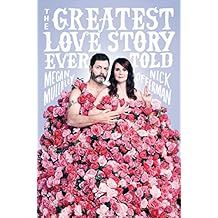
The Greatest Love Story Ever Told: An Oral HistoryAnd only Barbara Kingsolver and Trevor Noah could have awakened me at six in the morning so that I could walk to the Javits Center from our hotel room and be sitting toward the front of the stage by 7:30 slurping coffee and orange juice! They were worth the price of admission. Each displayed such brilliance and class, exacerbated by the comparison with the moderator, Nick Offerman, who offered exactly no class. It was way too early in the morning to find anything humorous about Nick and his wife, fellow comedian Megan Mullally, joshing about their spectacular sex life. Unless you're huge fans you can probably pass on this.

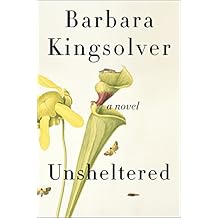
However, mark your calendars for October when Kingsolver's latest novel, "Unsheltered," will be released. She told the audience that when something scares her so much that she can't think about anything else, she writes about it. And nothing, we all agreed, can be as scary as what's happening right now. Or can it? Kingsolver sets her book in a dilapidated house in Vineland, New Jersey, during two time periods - under current circumstances and under an equally unsettling epoch, back in the 1870's after the Civil War had divided our nation and Charles Darwin shook up the world of science and education with his new theory of humankind.

I can't wait to jump into this book and will offer it to one of you the minute I'm finished. As Barbara told the audience, "stories will get us through times with no leaders better than leaders will get us through time with no stories." Unsheltered: A Novel

Trevor Noah, wisely chosen by John Stewart as replacement host of The Daily Show, has not only grown into the job but has exceeded my wildest expectations. In fact I find Noah to be a much more thoughtful interviewer than John was and deeply knowledgeable about each guest and our country as a whole. Perhaps being an outsider and witnessing the worst that governments can do - read his book about growing up in South Africa as a mixed-race child, "Born a Crime," - he can be more objective about the present state of our nation.

The staff of The Daily Show is attempting the impossible. They are collating all of the tweets that Donald Trump has issued in the first year of his presidency to try to get a handle on what kind of a man he really is. Noah tells us it should be simple, we'll know enough to know he should never have been president! Still, the thought of a computer algorithm able to identify Trump's most used words to form a psychological profile is intriguing. I'll be on the wait list for sure.

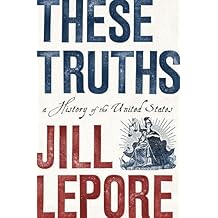
These Truths: A History of the United StatesThe big surprise of the morning was the absolutely delightful historian and Harvard professor Jill Lepore. She is such a dynamo. If I had had someone like that for a history teacher? Oh my, the places I'd have gone! Called "daring and provocative," words that speak to me, "These Truths, a History of the United States," commences with the signing of the constitution and the hypocrisy of its foundation, "that all men are created equal." It ends with the chapter heading "America, Disrupted," and the election of the 45th president.

Attendees at the breakfast only received a sampler of Lepore's book but it will be a great introduction to her theories and her writing style. You'll be hearing more from me about it in the near future. I'm hoping to stay home and read for a few months now. More on the amazing panel discussions I attended and on meeting Andre DuBus III will be coming in a few days. Happy reading!

Wednesday, May 30, 2018

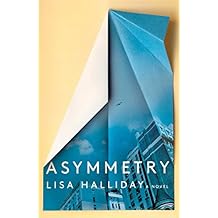
Asymmetry is a Strange but Wonderful Read

Months before the recent death of the inimitable Philip Roth I had been hearing rumors and reading reviews about a highly regarded new novel from a debut author named Lisa Halliday. Readers were left to surmise that this kind of sophistication from a new author was surprising, even unheard of, but that is just silly. Ms. Halliday has worked in the publishing industry for many years. She knew people who knew people. And, it seems, she once had a powerful mentor in Philip Roth.

Asymmetry: A Novel
 
 
Readers are often admonished not to make the mistake of attaching an author's story to his or her biography yet we do it all the same. In the case of "Asymmetry," Ms. Halliday seems to be playing both ends against the middle. She assures interviewers that her novel is only loosely based upon her long relationship with Mr. Roth and yet...
 
Let me say right now, it doesn't matter. This book is gorgeously written but it seems as if we are reading two novellas by equally skilled but different authors. The first, "Folly," is a lovingly told tale of a May-December love affair between Alice, a twenty-something editor and aspiring writer, and Ezra, a renowned, multi award winning author in his seventies who is facing the indignities of aging with less than good grace.
 
Their time together is filled with laughter. They are surprisingly compatible, each with an encyclopedic knowledge of baseball about which they are both fanatical. Ezra teaches Alice about music and writers she must read. He is generous though he expects Alice to run about doing errands at all times of the day and night as if she were his assistant. He is secretive about their relationship with his friends but grows to trust her as his health needs become more obvious. They discuss ending it, for her sake, so she can move on, but they actually are enjoying themselves.
 
Told in the third person, the author narrates from on high, observing, always acutely observing. Then, suddenly, without warning, we are in a first person tale, "Madness," of a young Iraqi-American who is being detained at Heathrow airport for no good reason except perhaps, his name, Jafaari. While Mr. Jafaari is made to wait for hours without explanation we learn his entire backstory, how he came to hold multiple passports, that he's a student of economics, that his brother, Sami, is a doctor who chose to stay in the middle east where he could do the most good, and never for a moment would you think that the voice is anything other than a young man in the throes of an everyday injustice visited upon those with certain names or coloring.
 
Thinking about the meaning of the title, asymmetry, we begin to understand that this novel is, among other things, an examination of one-sided relationships, the power struggle that ensues when one member of the duo holds more clout than the other and the sense of insecurity that is engendered by the duality.
 
This is an altogether fabulous novel, funny, smart, and unusual. Lisa Halliday may have had a leg up in the publishing world but she had to make it on her own smarts and there's no doubt that she did just that.

Monday, May 21, 2018

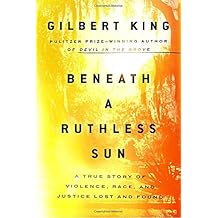
Gilbert King - Once Again Revealing Florida's Dark Underbelly

Two young black men are refused use of the bathroom at Starbucks and the police are called. A black doctoral student at Yale falls asleep in the common room and the police are called. A Nigerian woman is refused her paid for seat on a United Airlines flight and escorted off the plane because of her body odor. Where, you might ask, will these and the hundreds of other indignities perpetrated on people of color in the United States ever end?


After reading Pulitzer Prize-winner ("Devil in the Grove") Gilbert King's latest account of racism, injustice, and corruption in Florida, I'm afraid that I've come to the conclusion that these incidents will never end as long as we live among our disturbingly incomprehensible fellow human beings. "Beneath a Ruthless Sun" moves from the late ' 40’s to the ‘50’s, ‘60’s, and even the ‘70’s, when you might believe that the situation would have improved for the black population of central Florida. But you would be wrong.


Beneath a Ruthless Sun: A True Story of Violence, Race, and Justice Lost and Found
 

King’s primary subject is the notorious Sheriff Willis McCall, who oversaw a reign of terror for over twenty years before a new governor, Reuben Askew, finally removed him from office. McCall had been brought to trial many times, implicated in the torture and murder of young black men, but with the state’s attorney general in his pocket and the fear of God in potential jury pools, nothing every stuck.


Still there are plenty of heroes to go around in this true tale of a young white man with cognitive disabilities who, forced by McCall at gunpoint, confessed to a rape he did not commit. Jesse Daniels was shipped off to the Florida Hospital for the Insane in Chattahoochee without benefit of legal representation even though the victim, Blanche Knowles, wife of a prominent citrus baron, reported that her attacker had been a hefty black man. This man actually admitted to Blanche that he had been paid five thousand dollars to kill her but just couldn’t follow through when he saw that her baby was sleeping nearby. Her statement was never released to the public.

If this sounds like the complete inverse of traditional southern injustice where innocent black men were usually  the ones falsely accused, then just wait. The reasons for Jesse’s railroading, a perverse incident of racial and economic prejudice, will take years to uncover. In fact, for fourteen years Jesse’s mother, fueled by the passion of newspaper owner and journalist Mabel Norris Reese Chesley, fought to uncover the truth behind the travesty visited upon her gentle son who still slept with his teddy bear. Reese and her husband were hounded by the Ku Klux Klan, a cross burned on their front lawn, and eventually their unpopular editorial stance resulted in a loss of advertisers. Their publication, The Mount Dora Topic, was forced to close its doors.

Once again King, as evidenced by over twenty pages of meticulous notes, succeeds in exposing the outrageous corruption among too many judges, lawyers, and police officers, that flourished throughout central Florida even long after the passage of the Civil Rights Act. This haunting account serves as a timely reminder that, those of us who dream of a  post-racial world, may be waiting a very long time.

Thursday, May 10, 2018

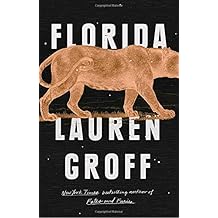
Lauren Groff's Florida Stories

Lauren Groff became the reviewers' darling after her successful novels "The Monsters of Templeton," and "Fates and Furies," came out. I read them both and I'm here to tell you that her collection of short stories, which will be published the first week of June, rise above her previous work. And I don't even like short stories! I reviewed this collection for my radio program at my local NPR station http://news.wgcu.org/programs/florida-book-page  but it won't likely be aired until the fall. I can't let you wait that long to be made aware of these powerful stories. Here's a reduced version of my opinion.

FloridaLauren Groff’s Florida is not the world of Disney princesses or performing whales that most folks associate with the sunshine state. No, Groff’s Florida is a borderline dangerous place where racial tensions run high, homelessness is rampant, and women and children are often imperiled. Humidity seeps into everything. Snakes, gators, and ants populate old cracker homes in the north Florida swamps where air conditioning is only for the wealthy. The atmosphere in these stories is as heavy and dank as the air.

But this is not a criticism. In fact, Groff’s words are luminous. Her characters are complex, often lonely, like Jude whose mother deserted him and his father in order to save her sanity. Back in Boston she owns a bookstore but by the time Jude finds her, his mother’s smothering need to atone for her absence drives him away.

Then there are the two sisters left alone during a storm in an old fishing camp. Before long the generator dies. Without food they resort to eating a chap stick they find in a drawer. They brave the saw palmetto scrub until they find a pond from which they draw water for boiling. The older sister is resourceful and clever. She reads to the little one, keeping her safe for as long as she can.

Most powerful of all are the personal essays that bookend this collection, each reflecting the stream of consciousness ruminations of the author, a wife who eschews the traditional role, and mother of two boys who fill her with love but also with the desire for escape. At night she runs through her neighborhood, burning off her anger at the present state of the world, fearful of the future her boys will face, and resentful of the partner who sleeps undisturbed through her nocturnal wanderings.
In the final story this same woman flees Florida’s summer steam and storms for the Normandy beach town of Yport, ostensibly to research Guy de Maupassant, but hoping to rekindle her collegiate love of all things French and instill it in her boys.
Painfully honest, deeply disturbing, sometimes redemptive, this collection of stories should be savored slowly, allowing Groff’s painterly language to awaken all your senses. You will be able to see, smell, hear, and almost taste the Florida she evokes with her words.