When I set down Meg Wolitzer's new novel, "The Female Persuasion," I wasn't sure that the author had accomplished what I thought she had set out to do. Ah hubris! I had brought my own bias to the book, a long held position that women will often undermine other women as evidenced by the 2018 election. I'm still flummoxed that so many women would vote against their own self interests to the extent that they would put an amoral, blustering buffoon in the White House when the most qualified woman in the country was the other option.
 So, pen in hand, I was ready to take copious notes when the book talk began yesterday in Naples between distinguished retired professor Dr. Elaine Newton and none other than Meg Wolitzer herself. The first words out of Newton's mouth were "this is not a political novel." What?
The central character, Faith Frank is a renowned feminist scholar, public speaker, author, and editor of "Bloomer," a magazine whose circulation is waning in the post-feminist age. Yes, this novel was written prior to the "me too" movement.
Greer Kadetsy is an acolyte. Shy and bookish, Greer has been raised by her self absorbed parents to be an unseen entity in her own home. Her boyfriend, Cory Pinto, and her best girlfriend, Zee, are the only people who intuit her untapped potential. Until, that is, she stands up and finds her voice during a Q and A at college with visiting lecturer Faith Frank.
This novel, Wolitzer tells her audience, is about intergenerational relationships and power. Power dynamics between lovers, friends, business partners, and in marriages and families. It's also about the ways in which all of us must give and take, sometimes lowering our standards or failing to live up to our ideals, to achieve a greater good.
Readers may follow Greer's rise in Faith's organization with trepidation or with glee depending upon their own life experiences. Greer blossoms under Faith's mentorship, using her talent for writing, for listening, to passionately advocate for the less fortunate. But will success change Greer? She is living the life she and Cory had always planned for but she's still alone in that brownstone in Brooklyn. Will she make amends to Zee for a betrayal early on in her career? Will she remain steadfast to Cory while he struggles with a devastating loss? And what will happen if Faith falls off that pedestal?
Like most of Wolitzer's work this novel is driven by strong characters. There's no doubt that she loves them. Each is complex, at times disagreeable and at others forgivable, even admirable. In other words, they are the fully human beings that Wolitzer is know for creating with insight and kindness. As the discussion wound down, Newton asked Wolitzer to share her thoughts about working with Glenn Close on her Oscar worthy performance in The Wife. How could I have missed that connection? Of course she wrote the book from which the film was made! It all made sense. Close couldn't lose if she had a Meg Wolitzer character to bring forth on the big screen. One look at her face and you just know she's nailed it.
So, pen in hand, I was ready to take copious notes when the book talk began yesterday in Naples between distinguished retired professor Dr. Elaine Newton and none other than Meg Wolitzer herself. The first words out of Newton's mouth were "this is not a political novel." What?
The central character, Faith Frank is a renowned feminist scholar, public speaker, author, and editor of "Bloomer," a magazine whose circulation is waning in the post-feminist age. Yes, this novel was written prior to the "me too" movement.
Greer Kadetsy is an acolyte. Shy and bookish, Greer has been raised by her self absorbed parents to be an unseen entity in her own home. Her boyfriend, Cory Pinto, and her best girlfriend, Zee, are the only people who intuit her untapped potential. Until, that is, she stands up and finds her voice during a Q and A at college with visiting lecturer Faith Frank.
This novel, Wolitzer tells her audience, is about intergenerational relationships and power. Power dynamics between lovers, friends, business partners, and in marriages and families. It's also about the ways in which all of us must give and take, sometimes lowering our standards or failing to live up to our ideals, to achieve a greater good.
Readers may follow Greer's rise in Faith's organization with trepidation or with glee depending upon their own life experiences. Greer blossoms under Faith's mentorship, using her talent for writing, for listening, to passionately advocate for the less fortunate. But will success change Greer? She is living the life she and Cory had always planned for but she's still alone in that brownstone in Brooklyn. Will she make amends to Zee for a betrayal early on in her career? Will she remain steadfast to Cory while he struggles with a devastating loss? And what will happen if Faith falls off that pedestal?
Like most of Wolitzer's work this novel is driven by strong characters. There's no doubt that she loves them. Each is complex, at times disagreeable and at others forgivable, even admirable. In other words, they are the fully human beings that Wolitzer is know for creating with insight and kindness. As the discussion wound down, Newton asked Wolitzer to share her thoughts about working with Glenn Close on her Oscar worthy performance in The Wife. How could I have missed that connection? Of course she wrote the book from which the film was made! It all made sense. Close couldn't lose if she had a Meg Wolitzer character to bring forth on the big screen. One look at her face and you just know she's nailed it.
I can't believe that it's been more than twenty years since Frances Mayes http://www.francesmayesbooks.com/ first enticed readers to Italy with her lusty, luscious story of Bramasole, the run down Tuscan farmhouse that stole her heart and ours. As Peter Mayle brought Provence to life in his hilarious "A Year in Provence," so Mayes' name has become synonymous with Cortona since the 1997 publication of "Under the Tuscan Sun." I wonder how many of us readers have strolled the streets and alleyways of this delightful village, savoring the local foods and sunning in the piazza with a gelato in hand?
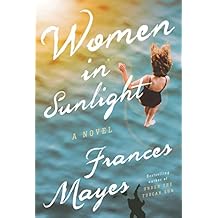 Mayes' love affair with Italy has never diminished and she still spends half of each year in Tuscany where her latest novel, "Women in Sunlight," is set. You might think that the plot, women of a "certain age" beginning again in a new country, might be overworked. I kind of did. But...they are such lovely women, so bright, brave, and talented that you just can't help but fall for them and the whole romp.
Their story begins in North Carolina where each of them, on their own at the end of lifelong relationships, meet at a tour of Cornwallis Meadows, a life care facility that, as described by Mayes, was eerily reminiscent of one I visited myself a couple of months ago. I had to laugh out loud at the unctuous tour guide gamely trying to sell a lifestyle that includes, pottery, visiting lecturers, yoga, and even your own gardening space, all for the price of your first born child and then some.
Camille, Susan, and Julia go for drinks after the presentation and discover that they are kindred souls. After months of dinners and weekends away to test their compatibility, they take a leap of faith, renting a villa in Italy for a year. And who do you suppose is their neighbor in the fictional village of San Rocco? Seeming to be a younger version of Frances Mayes, Kit is a poet and biographer who, with her partner Colin, become mentors to the three Americans in whom they see women open to all the pleasures and joys inherent in a new language and culture.
Mayes is a gloriously visual writer. One can easily picture a film evolving from this novel. Her knowledge of food, growing and preparing it, as well as her familiarity with local flora and fauna, art and architecture is extensive, enhancing our reading experience without ever feeling pedantic.
Over the course of the year each woman faces personal problems yet keeps these in perspective, not allowing their pasts to interfere with their growth and optimism about their futures. Their willingness to learn and adapt results in their being adopted into the community full stop. It's such a pleasure to spend time with all the denizens of San Rocco. If you don't find it on a map you can bet it looks a lot like Cortona. This is the perfect antidote for readers who may believe that their best years are behind them. Not if Frances Mayes can help it!
Mayes' love affair with Italy has never diminished and she still spends half of each year in Tuscany where her latest novel, "Women in Sunlight," is set. You might think that the plot, women of a "certain age" beginning again in a new country, might be overworked. I kind of did. But...they are such lovely women, so bright, brave, and talented that you just can't help but fall for them and the whole romp.
Their story begins in North Carolina where each of them, on their own at the end of lifelong relationships, meet at a tour of Cornwallis Meadows, a life care facility that, as described by Mayes, was eerily reminiscent of one I visited myself a couple of months ago. I had to laugh out loud at the unctuous tour guide gamely trying to sell a lifestyle that includes, pottery, visiting lecturers, yoga, and even your own gardening space, all for the price of your first born child and then some.
Camille, Susan, and Julia go for drinks after the presentation and discover that they are kindred souls. After months of dinners and weekends away to test their compatibility, they take a leap of faith, renting a villa in Italy for a year. And who do you suppose is their neighbor in the fictional village of San Rocco? Seeming to be a younger version of Frances Mayes, Kit is a poet and biographer who, with her partner Colin, become mentors to the three Americans in whom they see women open to all the pleasures and joys inherent in a new language and culture.
Mayes is a gloriously visual writer. One can easily picture a film evolving from this novel. Her knowledge of food, growing and preparing it, as well as her familiarity with local flora and fauna, art and architecture is extensive, enhancing our reading experience without ever feeling pedantic.
Over the course of the year each woman faces personal problems yet keeps these in perspective, not allowing their pasts to interfere with their growth and optimism about their futures. Their willingness to learn and adapt results in their being adopted into the community full stop. It's such a pleasure to spend time with all the denizens of San Rocco. If you don't find it on a map you can bet it looks a lot like Cortona. This is the perfect antidote for readers who may believe that their best years are behind them. Not if Frances Mayes can help it!
What happens when you put three book reviewers in a room and ask them to agree on their favorite novels of the year? Well, in a first for "Library Journal" that's just what happened and the results are now available for me to share. We each read thirty titles, wrote down our talking points, and met on the phone for a marathon book talk. Tastes are so different. What appeals to one may not be palatable to another. Still, we can agree that what we're looking for in a wonderful read is originality, glorious language, and a story that touches the soul. I hope you'll find that our ten finalists meet this criteria. Just click on the Literary Fiction tab. Oh, and while you're at it, take a look at the thrillers, crimes, sci-fi, and non-fiction titles as well.
https://www.libraryjournal.com/?page=best-books-2018&fbclid=IwAR0G3pwbe6HD8ZP1IFGL67LTMfbn_sisLgpqjWMf--wsXvuhn-nyX_g7c6I
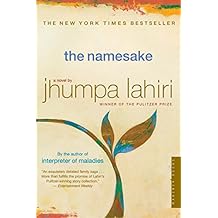 I finished listening to Jhumpa Lahiri's "The Namesake" with a deep sigh of satisfaction. A wonderful writer will do that for you, making it all the more obvious when you've read a book by an author whose talents just don't rise to the occasion. That's what happened to me this week as I also finished writing a review about a novel due out in the spring, a novel also about the immigrant experience in America, but one so dark and lacking in substance that I scarcely knew how to talk about it.
Lahiri, who won a Pulitzer for "Interpreter of Maladies," is able to take a domestic novel about one Bengali family adjusting to life in America and raise it to the level of poetry. Especially lovely was the lilting reading by actress Sarita Choudhury.
Ashoke Gangoli, a professor at MIT in Cambridge, returns home to Calcutta to meet the woman who has been chosen as his bride. There is a delightful scene in which Ashima listens outside the room as her parents discuss her with this young man whom she's never met. She sees his polished, cared for shoes where he's left them, according to custom, inside the door. Without thinking, she steps into them and senses that the man who owns these shoes will be a good and caring husband. She is right.
But the novel really centers around their first born child, Gogol Gangoli, and his relationship to his family, his world, and his name. Tradition says that Bengali children will have two names, the "real" one that the grandparents choose, and the nickname chosen by the parents. For the Gangolis there's no hurry. But Ashoke, stymied by the American practice of leaving the hospital with a birth certificate, makes a very personal decision to name his boy after the Russian writer Nicolai Gogol. And young Gogol will spend the next thirty years both running from, and embracing the identity he's been given.
We follow Gogol through college, his decision not to follow in his father's footsteps as an engineer, his love affair with Maxine and her very white bread family, a decision that he knows will distance him from his own parents but pursues anyway in an attempt to declare his independence from his Indian culture.
Lahiri's vivid descriptions of Bengali food and clothing, and the Calcutta that the family returns to every few years, made this book ripe for the film that came out in 2007 directed by Mira Nair. In fact, it was the movie that brought me to the book rather than the other way around.
"The Namesake" is a poignant, languid coming of age story that explores what it means to be an immigrant, what it means to be an American, and the annoyances and joys of being a member of a family. It also works as an oft- needed reminder of the importance of that welcoming message at the base of the statue of liberty.
I finished listening to Jhumpa Lahiri's "The Namesake" with a deep sigh of satisfaction. A wonderful writer will do that for you, making it all the more obvious when you've read a book by an author whose talents just don't rise to the occasion. That's what happened to me this week as I also finished writing a review about a novel due out in the spring, a novel also about the immigrant experience in America, but one so dark and lacking in substance that I scarcely knew how to talk about it.
Lahiri, who won a Pulitzer for "Interpreter of Maladies," is able to take a domestic novel about one Bengali family adjusting to life in America and raise it to the level of poetry. Especially lovely was the lilting reading by actress Sarita Choudhury.
Ashoke Gangoli, a professor at MIT in Cambridge, returns home to Calcutta to meet the woman who has been chosen as his bride. There is a delightful scene in which Ashima listens outside the room as her parents discuss her with this young man whom she's never met. She sees his polished, cared for shoes where he's left them, according to custom, inside the door. Without thinking, she steps into them and senses that the man who owns these shoes will be a good and caring husband. She is right.
But the novel really centers around their first born child, Gogol Gangoli, and his relationship to his family, his world, and his name. Tradition says that Bengali children will have two names, the "real" one that the grandparents choose, and the nickname chosen by the parents. For the Gangolis there's no hurry. But Ashoke, stymied by the American practice of leaving the hospital with a birth certificate, makes a very personal decision to name his boy after the Russian writer Nicolai Gogol. And young Gogol will spend the next thirty years both running from, and embracing the identity he's been given.
We follow Gogol through college, his decision not to follow in his father's footsteps as an engineer, his love affair with Maxine and her very white bread family, a decision that he knows will distance him from his own parents but pursues anyway in an attempt to declare his independence from his Indian culture.
Lahiri's vivid descriptions of Bengali food and clothing, and the Calcutta that the family returns to every few years, made this book ripe for the film that came out in 2007 directed by Mira Nair. In fact, it was the movie that brought me to the book rather than the other way around.
"The Namesake" is a poignant, languid coming of age story that explores what it means to be an immigrant, what it means to be an American, and the annoyances and joys of being a member of a family. It also works as an oft- needed reminder of the importance of that welcoming message at the base of the statue of liberty.
My sister and I often talk about books we like to read when we need a break from today's reality. Our go-to man is normally Alexander McCall Smith and the city of Gabarone in Botswana. But, looking for something a little different I recalled our neighbors in Maryland, a couple with an enviable home library, who had just returned from France, specifically the Dordogne area, because they had discovered Bruno Courreges, the delightful chief of police in St. Denis, brought to wonderful life by author and former UPI correspondent Martin Walker.
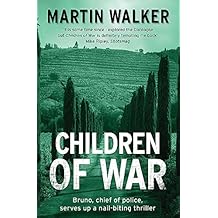 There are already fifteen books in this series, which I accidentally began smack dab in the middle with "Children of War." I had expected a cozy mystery set in the French countryside and was actually pleasantly surprised to discover that Walker manages to deftly juggle the light with the dark. So, while we meet many of the villagers, and learn about the local wines and foods, we are also treated to a suspenseful mystery that includes a Jewish brother and sister who were secreted from the Nazis in St. Denis during World War II, a local doctor who was sexually abused by a professor in medical school and forced to keep quiet about it, and a young Muslim boy with severe autism who was taken from a mosque in Toulouse and forced to build bombs for the Taliban.
If that isn't enough to interest you then I don't know what you're looking for in a good book! Bruno seems to be a sensitive officer, wise beyond his years yet hardened by his time in the service. He's sought after by several women in the community and yearns to be a parent. He has known Sami, the young man who disappeared from the mosque several years ago, since he was a child. Now Sami, escaped from the Taliban and seeking refuge back in St. Denis, is wanted by three countries, not to mention the FBI, because he is accused of actually being "the engineer," a man whose expertise with weaponry has been responsible for horrific deaths. Bruno and the local physician Fabiola hope to protect Sami and his family while unraveling the mystery of Sami's conversion to terrorism.
The story of David and Maya Halevy offers a short history lesson on the famed roundup of Jews in Paris who were then held in the Velodome while awaiting transfer by train to prison camps in Germany and Poland. Unsung heroes, families throughout the French countryside, took in children, converting them to Christianity for their safety, hiding them in apartments and on farms until the end of the war. Now wealthy and near death, the Halevy family wants to set up a memorial in St. Denis but they need the help of Bruno, the mayor, and even the local history teacher to find the husband and wife who sheltered them so many years ago.
Martin is a terrific writer, creating characters you'd really like to know living and working in an atmosphere that you can smell and taste. If you enjoy long series of novels where you can really feel at home and in the company of old friends then this is one you may want to try. I can't wait to begin at the beginning with "Death in the Dorgogne." Then I'll probably be perusing the Air France website!
There are already fifteen books in this series, which I accidentally began smack dab in the middle with "Children of War." I had expected a cozy mystery set in the French countryside and was actually pleasantly surprised to discover that Walker manages to deftly juggle the light with the dark. So, while we meet many of the villagers, and learn about the local wines and foods, we are also treated to a suspenseful mystery that includes a Jewish brother and sister who were secreted from the Nazis in St. Denis during World War II, a local doctor who was sexually abused by a professor in medical school and forced to keep quiet about it, and a young Muslim boy with severe autism who was taken from a mosque in Toulouse and forced to build bombs for the Taliban.
If that isn't enough to interest you then I don't know what you're looking for in a good book! Bruno seems to be a sensitive officer, wise beyond his years yet hardened by his time in the service. He's sought after by several women in the community and yearns to be a parent. He has known Sami, the young man who disappeared from the mosque several years ago, since he was a child. Now Sami, escaped from the Taliban and seeking refuge back in St. Denis, is wanted by three countries, not to mention the FBI, because he is accused of actually being "the engineer," a man whose expertise with weaponry has been responsible for horrific deaths. Bruno and the local physician Fabiola hope to protect Sami and his family while unraveling the mystery of Sami's conversion to terrorism.
The story of David and Maya Halevy offers a short history lesson on the famed roundup of Jews in Paris who were then held in the Velodome while awaiting transfer by train to prison camps in Germany and Poland. Unsung heroes, families throughout the French countryside, took in children, converting them to Christianity for their safety, hiding them in apartments and on farms until the end of the war. Now wealthy and near death, the Halevy family wants to set up a memorial in St. Denis but they need the help of Bruno, the mayor, and even the local history teacher to find the husband and wife who sheltered them so many years ago.
Martin is a terrific writer, creating characters you'd really like to know living and working in an atmosphere that you can smell and taste. If you enjoy long series of novels where you can really feel at home and in the company of old friends then this is one you may want to try. I can't wait to begin at the beginning with "Death in the Dorgogne." Then I'll probably be perusing the Air France website!


