Monday, March 11, 2019

Jennifer duBois' Cartwheel

I recently reviewed a book for Library Journal by an author with whom I was unfamiliar. "The Spectators," review coming soon, is a timely, insightful take on the influence of celebrity, the public persona versus the actual human being behind the mask. In scouting out interviews with the author, gathering background information, I discovered that she had written two novels prior to this one and each had won numerous awards. Where had I been? https://www.jennifer-dubois.com/about


"Cartwheel" came out in 2013 to much acclaim. It, too, examines celebrity and the pernicious, powerful effect that the media wields on our perceptions of people. This book is a
sophisticated and intricate character study that belies the youth of its author. It's about judgments made based on tabloid fodder, based on indiscreet social media posts, based on appearances, or even on body language, for instance, a cartwheel. You will find yourself guilty of pronouncing on these characters before the author has doled out all that she wants you to know about them. But if your emotional IQ is high, you may just find that you'll step back from the judgments for a little while and be very grateful that you're not on the jury.

DuBois tells us that the inspiration for this book was the headline grabbing murder trial in Italy of American foreign-exchange student Amanda Knox. If you followed the news at the time you may have held a strong opinion regarding Knox's guilt or innocence. "Cartwheel," takes place in Buenos Aires, the student being held in prison is Lily Hayes. Her roommate, Katy Kellers, is dead.

From those facts the author sets out to muddy the waters, introducing readers to Lily from the viewpoints of her father and sister, her landlady, Sebastien, her strange and ethereal lover, and the prosecutor. As each of these characters ruminates on the Lily they know, we the readers realize how extraordinarily difficult it is to truly fathom another soul's deepest reaches. 

How does a parent begin to cope with the thought that maybe, just maybe, his child is capable of murder? How horrible it must be to examine all the years that came before, looking for that tiny indication that something was awry. The joy she took in killing bugs? The lack of emotion at her grandmother's funeral? And if it's true, what does it say about us, the mother, the father, the genetic trail?

And what, the author asks, are the ramifications of the cultural barrier? Lily, a cosseted American in the eyes of the Argentinians, seems on the surface to embrace the cross-cultural exchange but are her actions perceived as condescending by her hosts. Does her attitude toward the politics, mores, and laws of her host country smack just a bit of arrogance?

Guilty? Innocent? Let's talk.

This smartly written, psychologically astute novel is a propulsive read and would lend itself well to a book discussion, as would her new one due out in April. As for me, I'm headed back to the library for "A Partial History of Lost Causes," finalist for a Pen/Hemingway Award.


Thursday, March 7, 2019

Hiatus

March, it is said, comes in like a lion. That has certainly been the case here in Maryland, snow, sleet, and freezing rain, where I've been suffering from seasonal affective disorder for the past six weeks. Yes, it is real! 
https://mayocl.in/2zumuDB Added to this is the fact that many of my family and dear friends are currently facing severe health crises. There's a feeling of helplessness in these situations that can feel overwhelming at times, even though I know in my heart that my strength and presence may be all that's needed.

Florida's politics may be terrible but this girl has lived there now for, impossible to believe, thirty-five years, and I'm spoiled rotten. There isn't a day that sunshine doesn't beam down on me, not a day that my bare feet don't relish the feel of grass or sand, and rarely a day that I'm not digging in the dirt. My mental health depends upon it.

I haven't written in six weeks because my opinions seemed so irrelevant in the overall scheme of things, and the truth is I haven't honestly found a book that seemed worth sharing. I guess I could call it reader's block. That isn't to say that I haven't been reading at all. I indulged in a very light and breezy reunion with The Number One Ladies Detective Agency in Botswana,  learned a little bit about Russian music in The Weight of a Piano, and grossed myself out listening to Mary Roach's trip down the alimentary canal in Gulp.

But today, my friend Don is walking the neighborhood with his new hip, the sun is shining even if it is only 32 degrees, and I followed the advice of my dear friend of fifty years, my college roommate Catherine Jones, and finally read Where the Crawdads Sing by Delia Owens. I seldom trust a novel that sits on top of the best seller list for this long, assuming that if everyone else likes it, my ornery self won't. I was wrong, wrong, wrong!

Delia Owens is a renowned naturalist and her knowledge of the environment informs every page of this lush, lyrical novel. Set in the marshes of the North Carolina coast, this is an exploration of extreme loneliness and disconnection. Kya Clark is still a child when her sisters and brothers begin to disappear one by one into the world. When her mother finally walks away from the abuse and neglect, Kya has only her brother Jodie to protect her from their dad. Then, unbelievably, Jodie goes, and Kya's salvation rests in the birds, fish, bugs, and plants that surround her.

It's been a long time since a character tugged at my heart as Kya did. She is wise beyond her years, resilient, brave, and stronger than any child should need to be. When Jodie's friend Tate comes into her life, it takes a long time for her to trust his intentions. They feel each other out, not with text messages or phone conversations, but with tentative gift-giving, items like shells and feathers left anonymously on a tree trunk, treasures from the natural world that they both love.

But as Kya matures, learning from Tate to read and write, the so-called real world intrudes on her solitude. The townspeople fear and denigrate the girl in the marsh, failing her on so many levels, neglecting to recognize her brilliance even as Kya becomes a successful artist and writer, sharing her world with the public through her gloriously crafted reference works.

Delia Owens has given readers something that's so hard to find any more - an original story, a novel that you simply can't put down. Combining poetry, mystery, character analysis, and enduring love amid horrifying abuse, this beautiful book tops my list of favorites for the year even though it's early days. I was on the wait list in Lee County for three months and never received it. You may just have to buy your copy.

Friday, January 25, 2019

The Amazing Maze at Windermere

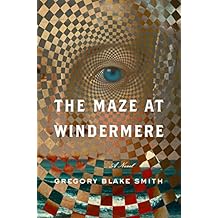
The Maze at Windermere: A NovelYesterday I had the distinct pleasure of listening to Canadian scholar Elaine Newton, giddy as a school girl so overawed was she by his imaginative bent, quiz author Gregory Blake Smith about his latest novel, "The Maze at Windermere." My favorite reviewer, Ron Charles at the Washington Post, called Smith's book "staggeringly brilliant," and though I'll admit it took me a little bit longer to arrive at the same conclusion, arrive I did.

I miss school so much! If I had been reading this in a college classroom - Smith teaches creative writing at Carleton College - I would have appreciated it much sooner, picking up on all of the literary allusions sprinkled throughout. It took hearing Mr. Smith read each of the five voices, in their distinct vernacular, that tell this convoluted, maze-like tale spanning three centuries, to hammer home the realization of the author's incredible feat. Like Ms. Newton I kept wondering, "how did he do it?"

The five individual but interconnected stories all take place within the same few blocks of Newport, Rhode Island, beginning in 2011 and rolling backward to the 1600's. Each tale is anchored by a narrator facing a moral conundrum involving love, money, status, and agency, or lack thereof. Each will make decisions that cause others pain, some inadvertently, some with evil intent.
 I found it especially revealing that, of the five main characters, (four male), the strongest one is Prudence. A fifteen-year-old girl with a woman's worries, Prudy belongs to a Quaker community. Her father is missing at sea, her mother dead, and she is responsible for baby sister Dorcas, a home yet no money for food or fuel, and an enslaved child named Ashes, burdens that weigh heavily on her mind.

In the 1700's we have the story of Major Ballard, a conniving, self-important Brit who lusts after a young woman, the daughter of a Jewish businessman with whom he has a difficult relationship. In the 1800's we meet Franklin, an artistic fellow who yearns for a permanent place in Newport's highest society. Though his penchant is for men, he and his female benefactors scheme to arrange a marriage of convenience with a naïve widow, the owner and creator of the maze at Windermere. 

A fascinating section introduces readers to a young Henry James at the budding of his writing career. Some readers will pick up on the allusions to "Daisy Miller," but I don't think any of us in Thursday's audience saw the tie-in to "Wings of the Dove." Thank you Mr. Smith!
And then there's Sandy, the beautiful male specimen who never quite made it out of the top fifty on the pro-tennis circuit but is sought after among the jet set of Newport for his teaching and sexual skills. As he insinuates himself among the women at Windermere, heir to the estate Alice, who suffers from cerebral palsy and severe depression, her best friend and companion, jewelry artist Aisha, and sister-in-law Margo, one begins to wonder just who's playing whom.

This novel is an English major's dream! Patience may be needed at first but once you've gotten used to the various narrative conventions you'll be avidly jumping back and forth among stories, curious to find out how Franklin or Prudy are faring. Newton told us that the maze is a metaphor for life and, of course, that makes sense. We often get lost along the way. False starts, dead ends, and rebounds are all par for the course as we navigate the lives we've made. But the biggest mystery of all may be that of the workings of the human heart. And in this realm, Gregory Blake Smith shows generosity to all of his characters.

Tuesday, January 15, 2019

Wonderful Book, Unfortunate Title

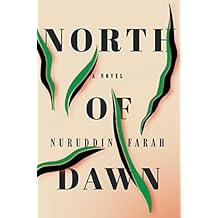
North of Dawn: A NovelNuruddin Farah has spent a lifetime writing about the plight of the Somali Diaspora and the difficulty immigrants must overcome as they assimilate into new cultures and countries. I have had the privilege of reviewing several of his novels for "Library Journal" and have discovered that his work, especially this new book, "North of Dawn," is extremely accessible to readers who enjoy learning through fiction.
 
From the chilling moment when a suicide vest explodes in a crowded Somali marketplace, ripple effects are felt in Oslo where the bomber’s parents, Gacalo and Mugdi, have lived and thrived as secular Muslims for decades. Now Gacalo, fulfilling a promise to her dead son, Dhaqaneh, intends to sponsor his widow Waliya, and her children Naciim and Saafi, causing a rift in the family which is concerned by the burgeoning anti-immigrant sentiment in Norway. How will their friends respond to the news that their own son has embraced jihad?
 
Reclusive Waliya, fully cloaked in niqab and strongly influenced by a local Imam, is reluctant to allow her bright, inquisitive children to take advantage of the tremendous educational opportunities that Norway provides for new immigrants. The kids, naturally, are torn between loyalty to their mother and the exciting freedoms offered by their grandparents. Nacim especially, has developed a close relationship with his grandfather, preferring to eat and sleep at his home, while everyone worries that Waliya may be grooming young Saafi for marriage to a much older man.
 
Then a terrorist strikes closer to home and Farah poses the question, are we ever truly safe in a world where fear of “the other” prevails? Farah is always passionate when delving into the conundrum faced by victims of brutality forced to emigrate to a foreign, often frightening country, no matter how welcoming the new home may be.
 
An exile himself, from a homeland he can never stop loving, Farah has taught and written in countries all over the world and currently lives in South Africa. His name is always bandied about as a potential Nobel Prize winner, and though it hasn't happened yet, I have no doubt that it will. If you're interested in getting acquainted with him, I have copies of both "North of Dawn" and his 2014 novel, "Hiding in Plain Sight." Send me a comment soon as next week I'm taking the train to the cold north for a couple of months.

Friday, January 11, 2019

Reading into a New Year

It's already eleven days into the new year. Where does the time go? Don and I have been lollygagging our way through the first week, putting off the packing that must be done before we head to Maryland at the end of the month for his hip replacement surgery.

I had two assignments from Library Journal, wonderful novels that are always dark and deep, so I prefer to intersperse them with what I consider a little light reading. This time that didn't turn out to be the case. Former co-worker and friend Lesa Holstine had recommended Jeffrey Siger's "An Aegean April" on her favorites list and, since I love, love, love Greece, I dove right in. This is the ninth in a series featuring Andreas Kaldis, Athens chief inspector, who reflects Mr. Siger's own mixed feelings about his adopted country.

 There is nothing light about the plight of refugees seeking asylum on Greek and Italian islands as Don and I learned first hand from his grandson who's been studying and writing about the crisis in Sicily. The novel begins with a horrific murder of a wealthy businessman, Mihalis Volandes, who, having made his fortune in shipping, has partnered with an activist NGO, offering his ships to help rescue Turkish migrants floundering at sea off the coast of Lesvos.

What doesn't make sense is that Ali Sera, a young immigrant himself, who's been working with the NGO, Safe Passage, is found at the scene covered in blood. There is no murder weapon and no motive but still he is arrested in a ploy to strike the fear of immigrants into the hearts of the island's residents, a plot that sounds eerily like the contrived crisis that our president has concocted at our own borders.

Siger examines the usual tensions that arise between police departments that spar for funding and jurisdiction, as well as the corruption that motivates a medical examiner to falsify records in order to keep Sera locked up. The feisty American, Dana McLaughlin, who heads up Safe Passage, puts pressure on Kaldis to come over from Athens to intervene in the investigation and the search is on for a ruthless killer with no political agenda, and the head of a Turkish slave trafficking ring. This fast-paced mystery stands perfectly well on its own but it may prompt some of you to go to the beginning and get to better know chief inspector Kaldis and his crew.

On my ipod I had downloaded the second book by Thomas Mullen following "Darktown," http://readaroundtheworld-sallyb.blogspot.com/2016/10/mullens-darktown-tells-of-dark-time.html which introduced readers to the Atlanta police department circa 1950, a time when the government forces the hiring of Atlanta's first black officers. Lucian Boggs and Tommy Smith struggle to do their work within the tight parameters set by the department, no weapons, no offices, no access to police cars, in other words, they are set up to fail.

"Lightning Men" begins more slowly than its predecessor but it is equally powerful as a historical testament to the courage of these young black officers, educated veterans of World War II, who hope to prove their worth to their own black community who often see them as sell-outs, and to the white community they plan to integrate.

In this episode Boggs and Smith are apprised of an illegal moonshine business being run out of the back of a locally owned grocery store. Trying to keep booze and drugs out of the black community is a priority for Boggs, the preacher's son, but when the partners stake out the operation, catching the perpetrators in the middle of a handoff, they discover, to no one's surprise, that it's white men running the show. Black officers are not even allowed to question a white man, let alone arrest him, and now one is lying dead in the road.

Addressing issues of white flight, neo-Nazis, the Klan, and the Sisyphean task facing black police officers in the Jim Crow south, Thomas Mullen does an outstanding job of delivering tight thrillers coupled with an accurate look at our shameful history of racial injustice.