Showing posts with label National Book Award winner. Show all posts

Sunday, February 15, 2015

Thoughts on War and Death in Redeployment

I've recently returned from the frozen tundra of mid-winter Ohio where the love of family and friends helped to keep me warm as we sat with my brother Alan during his final days. He was only sixty-three years old and I'll admit that I did plenty of interior raging at what I perceived as the outrageous unfairness of his devastating cancer diagnosis.

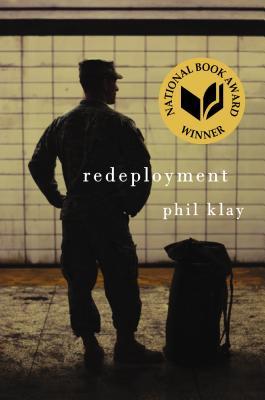
 Yet, simultaneously, I happened to be reading Phil Klay's National Book Award winning collection of short stories, "Redeployment," about the Iraq war and its aftermath. It helped to put my thoughts into perspective. My brother has a glorious legacy, a wife who will always love him, four wonderfully unique children, and six amazing grandchildren.

What if, I wondered, his life had veered down a very different path back in the late '60's, early '70's when the draft lottery was implemented. How well I remember the night my college buddies and I hung breathless in front of the TV watching our futures be determined by a rolling metal basket full of numbers. The Vietnam War was raging. Some would go halfway across the world to fight a battle they didn't even believe in based upon the fluke of a glass capsule in a cage. My brother was spared.
 
18114068

Not so fortunate are the boys Klay introduces us to. One could say that the difference is that these kids signed up. Full of the jingoistic passion that permeated the country after the Sept. 11th attacks of 2001, 18-year-olds were falling over themselves to join the Marines. Or were they? As Michael Moore pointed out so eloquently in his film, Fahrenheit 9/11, those who go to war today can often be lottery losers as well. Today's lottery is a matter of economics. Those with advantages stay home and get more advantages. Those without, go to war.

The strongest story in the collection is undoubtedly the first, the title story, "Redeployment." It's a heartbreaking rendering of a soldier returning to the states after a nine month tour in Iraq and the stream of consciousness thought process he goes through as he contemplates the reunion with his wife and their dog. The awkwardness as husband and wife try to avoid any serious conversation, plying each other with platitudes, is palpable. When he takes her to their bed he sees, just for a split second, fear in her eyes.

Phil Klay served in Iraq after graduating from college. He admits in interviews that he never actually was in a dangerous position. Yet he manages to capture the chaos of war and the bitter irony of the manner in which our government conducts war. Another story, "Money as a Weapons System," reads like "Catch-22," when a new foreign service officer is charged with rebuilding a water treatment facility (that we had destroyed, of course) with money earmarked for a women's health facility that was hugely successful.

And in "War Stories," a horrifically burned, deformed young man named Jenks meets with his best friend in a bar where they have a surreal conversation about how to get Jenks laid without having the woman pity him. Later, a girl joins them who is doing research for a veterans' film project. She asks pointed, seemingly heartless questions of Jenks about his injuries, how it happened and what he felt afterwards, yet Jenks handles these with aplomb. It is his friend, angry and defensive, who loses it.

I have read some provocative, excruciating, powerful novels about war. Karl Marlantes' "Matterhorn," will always stand out as the finest depiction of the Vietnam War for me. And though I don't think that Phil Klay's short stories have the cohesion I'd like to see in a series, I suspect that they will be remembered, along with other Iraq war classics like "Billy Lynn's Long Half-time Walk," or "The Yellow Birds," as a fine example of the deeply personal and profound literature coming from our veterans. We owe them a reading to bear witness to their bravery, confusion, and pain, and to accept partial responsibility for sending them off to war in the first place.

Monday, January 26, 2015

Aliens, Outcasts, and Border Crossers

Have I gotten your attention? Some of you may know that I am auditing a class in the Literature Dept. at the local university. I felt that I needed to brush up on reading critically for more comprehension. The name of the course is "Topics in Cultural Critique." I just love it, and I find that I really enjoy being challenged to read more deeply and not simply to tote up numbers on my annual score board.

We have already discussed and analyzed J. M. Coetzee's "Waiting for the Barbarians," and have now moved on to our professor's favorite writer, Cormac McCarthy. Thank you Dr. Mendible! I would never have picked up "All the Pretty Horses," on my own. Even though it won the National Book Award, I'm sure that I saw it as just another unnecessarily dark story about people I wouldn't relate to, and a Western to boot. I was so wrong.

This novel was simply stunning. I read that it has an "elegiac rhythm," and I couldn't have described it better. McCarthy sweeps you up in that rhythm, almost as if you are moseying along on horseback with the two young men who live at the heart of the story, John Grady Cole and his friend Rawlins. The buddies complement each other. Quiet and easy going, they head out of San Angelo, Texas, on a quest to learn about themselves and to cross the boundaries that hold them back. Physically, that would be the Rio Grande. Psychologically, it will be so much more.

But as they ride into Mexico they find that another young man has been following them. To Rawlins, a little more skittish and superstitious than Cole, this third party feels like trouble. Blevins is immature and rash like the thirteen-year-old that he is. He appears to be riding a stolen horse. He is neither equipped nor prepared for the long journey ahead and when Cole agrees to let him tag along, the dynamic changes instantly. The atmosphere becomes foreboding.

Keeping in mind the subject of my class I saw immediately that McCarthy was writing so much more than a western. His love of the land and his descriptions of the people and the plains evoke a time long gone by and when he writes of the relationship between a man and his horse, the intuition and beauty of the animal, it is breathtaking to read. This is also a story of rash young love between people from different classes and cultural backgrounds. It is about breaking societal rules and paying a heavy price.

Yes, it is violent, but it is not gratuitously so. Prison is a grim, inhumane place where men are reduced to animal-like behavior. After all, we are animals in the end, the author seems to say. Cole and Rawlins may be unfairly incarcerated but, once in jail, they know what they have to do to stay alive. Cole will cross the boundary of his moral code, and though he has no choice, he will never be the same.

Upon finishing this book I just sat and stared into space wondering how did he do it? The only book by McCarthy that I had read in the past was "The Road." Now I have to go back and add the next two novels in this, his Border Trilogy, to my list of "must reads." Ten more days before we discuss this in class. I can hardly wait!