Showing posts with label lesbian relationships - fiction. Show all posts

Sunday, March 25, 2018

Amy Bloom's White Houses

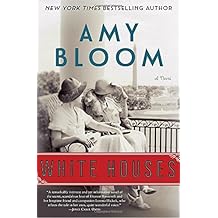
White Houses: A NovelRight out of the gate I'll tell you that I have very  mixed feelings about Amy Bloom's latest novel - I reiterate, it is a novel - about the journalist Lorena Hickok and her long relationship with Eleanor Roosevelt. "White Houses" is another in a very popular genre that I call "fictional biography," a genre that began ten years ago with Nancy Horan's "Loving Frank," but which I now believe has been done to death. 

Bloom's novel is beautifully written and is based upon serious research at the FDR library at Hyde Park in New York state and also the highly regarded three volume biography of Eleanor by Blanche Wiesen Cook. But there's something disconcertingly disingenuous about putting fictional words in real peoples' mouths that bothers me as a reader.

That said, I think that Bloom does real justice to the figure of Lorena Hickok, a woman who grew up in extreme poverty, yet worked her way up to become a well-regarded journalist and newspaper woman who was covering then Governor Franklin Roosevelt as he launched his first presidential run. In so doing, she met and fell deeply in love with the refined, shy Eleanor. Ostensibly they were as different as two people could possibly be and yet they drew from each other's strengths.

It's no secret that Franklin was a ladies' man extraordinaire both before and after he was stricken with polio and that his infidelity was very painful for Eleanor. Still, she was his eyes and ears, his conscience and confidant and I believe that they, too, deeply loved one another. What a conundrum. Still, after Franklin's election, Hick, as Lorena was known, became a permanent fixture at the White House, living there for months or even years at a time. She had to give up her hard-won career in journalism as her objectivity was now clouded by her proximity to the first couple, and she always felt that she was there on sufferance.

Bloom deftly addresses the infuriating hypocrisy, still present today, of the double standard for sexual behavior between men and women. Eleanor and Hick's relationship made the president vulnerable to blackmail and undue influence, yet his own dalliances with other women were accepted and condoned. And then there were the "kids" and their disapproval which strained the women's bond as well. How terribly difficult it is to be your true self when under public scrutiny! But Eleanor and Hick endured.

For readers who love all things Eleanor, this novel will be a must read I'm sure. I've no doubt that book groups will devour it.  Me? I prefer the real thing and, though it will be time consuming, I'll dip into the definitive Cook biography for true reading pleasure

Tuesday, January 23, 2018

Must We Love the Characters for a Book to Resonate?

Last week I finished a book that's been languishing on my kindle for way too long. I told Don I hated it. Then I proceeded to talk about it with him for half an hour. So, the question is, how can one hate a book that keeps percolating long after "the end?"

Product Details

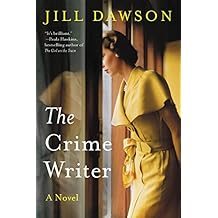
"The Crime Writer," by Jill Dawson (http://jilldawson.co.uk/) is that book. I violently disliked the characters even as I tried to get inside their heads. Jill Dawson did the same thing. This novel is one of that oh so popular genre I've dubbed fictional biography. Novelist Patricia Highsmith, best remembered for her Ripley series, is the subject of the book which is written like a novel within a novel. It is convoluted enough for the reader to wonder where the truth of Ms. Highsmith's life and the fiction differ. I'm still unsure of the ending and I reread it several times.

Truth: American novelist Patricia Highsmith, master of psychological, disturbing literature, moved to a bucolic country cottage in Suffolk, England, in order to complete work on two books. She wanted, in fact craved, complete privacy except for visits to and from her lover in London, an unhappy wife and mother named Sam. Fiction: What Highsmith got instead was a nosy neighbor and an aggressively pushy journalist, Virginia Smythson-Balby, who seems to show up unexpectedly and everywhere that Pat goes.

Pat Highsmith's reputation was as an extremely difficult person with whom to spend time. A raging alcoholic who still managed to put out an enviable trove of award-winning books, in the book she keeps up a running, angry, resentful commentary on the presence of "Ginny" Smythson-Balby, even as she encourages her to visit for drinks and chatter. The sense is that the stalker has become the stalked.

The catalyst for the crux of the story, a horrific crime of passion and the guilt that follows, is Sam, the somewhat reluctant lover. Torn between the easy luxury of her life as Mrs. Gerald Gosforth, even in light of spousal abuse, and the future she would face as Pat's partner, Sam hesitates to fully give herself to either Pat or the marriage, prompting Pat to act out in a way that one of her characters might. And then things get murky indeed.

Jill Dawson is especially brilliant when she examines guilt, how it eats at the soul, how it wreaks havoc on one's imagination, and how an act of evil yearns to come out into the open. The crime writer becomes the criminal and Jill Dawson becomes Patricia Highsmith, creating an atmosphere every bit as dark and evil as the one that suffused "The Talented Mr. Ripley."