Friday, August 2, 2013

Ann Hood Has Done it Again

I first discovered Ann Hood when I read her memoir couched in a novel called The Red Thread. This lovely book spoke to the world of adoptive parents, specifically six sets of adults who for various reasons, had decided to adopt girls from China. Ms. Hood and her husband were one of those couples.

Red TreadBecause I loved this book I was thrilled to see a copy of her new one, The Obituary Writer, sitting on the new book shelf here in my own adopted home, Maryland. The cover art alone would have forced me to pick it up. I was not disappointed.

I've always been fascinated by obituaries. I read them enthusiastically
in every newspaper that I get my hands on. Whether written by the
family or by a professional, an obituary is a constant amazement to me.
What wonderfully interesting people there are out there in the world!
People who have loved, been loved, made a difference in so many lives,
unsung heroes, not just a compilation of dull facts but a once living,
breathing human being whose death has left a void that won't be filled.

So, does one have to have faced a loss, a death if you will, to be able to articulate that loss for others? I believe that Ann Hood asks this question and so much more in the small but heavy novel about a young woman, Vivian, whose great love went missing after the San Francisco earthquake back in 1906. Closure is not possible as David's body is ever discovered and though Vivian's friends try to help her work through her grief, it's a tangible thing that she chooses not to let go of. Rather, she turns to writing obituaries as a way to connect her loss to that of others.

Alternating chapters take us to another woman, Claire, in the heady year 1960. JFK is about to be inaugurated. Hope and change are in the air. (we already know how that works out) Women like Claire, married to men who want an empty head, a peaceful home, and a martini chilling when he strolls in from his hard day at the office, are beginning to awaken to the idea that there might just be something more.

 Claire embarks on a madly passionate affair with Miles, the complete opposite, in every conceivable way, of her own husband, Peter. The results will lead Claire to re-evaluate her upbringing, her own desires for her future and will bring her to a new understanding of her previously unknowable mother-in-law, Birdy.

Ms. Hood makes each woman's story compelling in its own right yet manages to connect the dots between the two in a way that the reader may begin to see. Guessing will not hurt your appreciation of this novel in any way. One intuits that Ms. Hood is no stranger to grief. I happened to remember that her own daughter died of a freak infection over ten years ago and I suspect it's safe to say that this loss informs all of her work. There is a chapter in this novel that will bring you to your knees in it's oh too truthful vision of what it must be like to lose one's child. This is the beauty of Ann Hood's writing and of this quite wondrous novel.




Tuesday, July 30, 2013

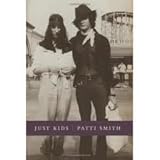
Patti Smith's Just Kids

I know that I'm very late to this party but sometimes I'm just so unreasonably ornery. Why did I delay in reading this memoir even after it was deemed a National Book Award winner? Who knows but, oh my, better late than never. You must listen to this book! It could be read by no other than the author herself.

Product Details

I've tried to think about where I was and what I was doing in the early '70's that would have kept me from knowing about Patti Smith. She's now being called "the grandmother of rock and roll." A Jersey girl, by way of Philly, while I was still in college she had set off for New York City and the opportunity to follow her dream of creating art. Not cut out for school and certainly not for the factory job she was escaping, Patti Smith had the courage of her convictions and a little bit of luck, a push from the Fates, a lost coin purse in a phone booth - remember those? - that enabled her to get on that train to the city.

Her memoir is a book for the ages. She manages to capture the zeitgeist of those crazy years; women were finally coming into their own, the sexual revolution was upon us without the specter of the horrific illness that would soon devastate our ranks, singers, songwriters, poets, and artists were pushing the boundaries, Janis Joplin, Jefferson Airplane, Allen Ginsberg, Jimi Hendrix, The Doors, Woodstock, there was an explosion of creativity and Ms. Smith, though seemingly on the periphery, was influenced more than even she knew.

Her writing is gorgeously fluid, her voice is humble and unassuming. At the heart of this memoir is love with a capital L. Although Ms. Smith's life is inextricably entwined with that of the controversial artist/photographer, Robert Mapplethorpe, and the lifelong love they shared, it is also a memoir of familial love, spiritual belief, and a complete and abiding faith in one's own talent and ability. It's a tale of resilience and staying power.

There is a kindness to Patti Smith that is evident throughout this remarkable book. She doesn't "dish" on folks, though she's seen plenty. She was dismissed by some but never judges those people. Rather, she profusely thanks those who helped her and Robert as they pursued their passions, during the many lean years, times when friends fed them, loaned them clothes, and gave them a spot to flop. Patti's supremely emotionally supportive family shines, Robert's, not so much, even though Patti graciously handles the anecdotes revolving around Robert's mother.

Reading this memoir sparked a curiosity in me. I had to go online and see what was going on while I was navigating the waters of a new marriage and instant motherhood. Through the wonders of the Internet I was able to see video of Patti Smith and her band performing, as they still do even though this remarkable woman is 66 years old. I also found an interview she did at the Smithsonian shortly after she received the National Book Award. http://video.search.yahoo.com/search/video?p=patti+smith+at+the+Smithsonian

Just Kids is a joy to read and, for this librarian, an ode to the self-taught man. Patti Smith's prodigious reading and knowledge of poetry and the arts is profound. Her love of the written and spoken word is there on every page. I simply loved this book. Did you?

Thursday, July 25, 2013

Karen Joy Fowler's Book Could Have You Beside Yourself

I happened to hear a Diane Rehm show last week on which she interviewed Karen Fowler about her new novel, We Are All Completely Beside Ourselves. I love that Diane devotes a full hour of her show to writers and their books several times a month. One always senses that Diane has, in fact, read the book and has probing questions prepped and ready to ask. This interview was no exception. In fact, it prompted me to run - literally, as it's only one block away - to the library that very afternoon in search of a copy. http://thedianerehmshow.org/shows/2013-07-17/karen-joy-fowler-we-are-all-completely-beside-ourselves

Let me say, first up, that this is a very serious book but that Ms. Fowler has a wonderfully wry sense of humor that helps ease the pain. She has obviously done a tremendous amount of research and though this is a work of fiction I suspect that it's based on many stories out there that are true.

A few days after Rosemary Cooke is born, her parents decide to take part in an experiment led by her dad, a professor at the university in Bloomington, Indiana. An "adopted" sibling of the same age is brought to live in their home, to be raised beside Rosemary as her sister. The only issue is that Fern is a chimpanzee. And while this may sound funny at first, you'd need to really stop and think about all that this implies before laughing. Ms. Fowler is not amused.

Try to imagine the psychological ramifications of introducing two newborns of differing species to each other and allowing their growth and progress to become your life's work. Graduate students come and go, each movement, each speech pattern, each behavior from thumb sucking to toilet training is recorded and comparisons made. Rosemary is a talker, asked to share her every thought for the researchers' notebooks. Fern's vocabulary is pretty impressive too, but she uses sign language to indicate her wants and needs.

Fern and Rosemary compete for their older brother Lowell's undivided attention, creating a sibling rivalry like any among three brothers and sisters. But when Fern and Rosemary are around five years old, the animal nature of the chimpanzee (not that we aren't all animals, but that's for the book discussion) manifests itself in a way that results in Fern's being torn from the only family she's ever known a rending that causes the Cooke family to implode.

Karen Joy Fowler has filled her latest novel with common themes, the trickiness of memory, jealousy, family dynamics, and separation, but she presents them in a truly unique way and in beautifully rendered prose. She prods readers to ponder their feelings about animal research and scientific achievement. Is it worth it? How much is too much? How sentient are these beings that we inject with diseases and tumors? What happens to them when we're "finished" with them?

I know I have some friends out there who would really love to be provoked by this novel. Beth Conrad, Janice Danzig, I'm talking to you. I'd love to have you read it and let me know what you think. Let's chat.

Monday, July 22, 2013

Visitation Street - The Brainiest Thriller You'll Read this Year

So who is Ivy Pochoda, you might ask. Why did Dennis Lehane take an interest in her and publish her second novel Visitation Street under the aegis of his new imprint for Harper Collins? In his sales pitch to booksellers and those of us bloggers and librarians who talk up books for a living, he called this book "an urban opera...filled with mystery, poetry, and pain." When Dennis Lehane speaks, those of us who have known him and his work from the get-go, sit up and take notice. If you happen to trust me, I'll tell you that this is the finest suspense novel I've read in a long, long time.

Ms. Pochoda's Harvard degree and oh yes, that MFA from Bennington, are on display on every page of Visitation Street. She writes in a tight, compact style that moves almost too quickly, so don't make the mistake of rushing through it. You just might miss something so beautiful, so heartbreaking, so perfectly pitched, that you'd have to, no, want to, return and read it again.

The storyline is a pretty simple one. Two antsy teens looking for something novel to do on a Saturday night in the hood, June and Val just want to break out a bit, get away from the same-old, same-old. They walk down to the pier and shove off into the East River on a bright pink raft. By morning, only Val is found, barely alive, washed up under the pilings.

I've never been to Red Hook in Brooklyn but I feel that I know it like the back of my hand. That's how good Ms. Pachoda is at giving life to the borough. Just across the river from Manhattan, Red Hook is more like anytown, USA. The Greek has his restaurant, the Lebanese, his grocery store. The Irish have the old bar where the longshoremen used to hang out and the blacks have the high rises. Without benefit of lawns and trees, they cultivate a communal garden in the park that separates them from the white families. But when someone dies or goes missing, the effect runs deep.

The girls have a friend named Cree, a young black man on the cusp. He could go either way, all he needs is a push in the right direction. A community college application sits unfinished on his desk, his mom communicates with the dead, spending her days sitting on the park bench where her husband Marcus, Cree's dad, was accidentally shot and killed six years ago.

Cree has a mysterious guardian who haunts the docks at night, painting graffiti on the shipping containers, store walls, and security grates, but mostly making sure that Cree doesn't get himself on the wrong side of the law. His cousin Monique has a glorious talent, her voice is that of an angel and though she calls out to Jesus in the Tabernacle Church on Sundays, she, too, could take a wrong turn any other day of the week. Like her aunt Gloria, Monique has the gift, but the only voice she hears is June's.

Each beautifully wrought character blazes off the page, fully human and thus, fully flawed. They hurt each other, they love each other, they flash with anger and rage at the dearth of opportunity, they long to venture out yet they belong where they've been planted. They are kind and hateful, loyal and fickle, they live and breathe and we, the readers, are so very fortunate to be in their midst.

I have written previously here about George Pelecanos, a novelist who I also found through Dennis Lehane, and one who kills me with his gritty, heartbreaking stories of guys trying so hard to break out of the cycle of crime that plagues young men, especially young black men, on the streets of our nation's capital. Ivy Pachoda is my new Pelecanos, but with one difference, a ray of hope. Grab a copy of this novel as quickly as you can. If you've already burned through it, I'd love to hear from you.

Friday, July 19, 2013

A "Must Discuss" Book by Sheri Fink

Ms. Fink happens to be a Pulitzer Prize winning journalist who is also an M.D. and holds a PhD from Stanford. She has reported from war zones around the world but her new book, Five Days at Memorial, Life and Death in a Storm-Ravaged Hospital, is set in the war zone that was New Orleans during and after Hurricane Katrina.

This absolutely unputdownable (yes, spell-checker, I know that isn't a real word) non-fiction account of the insurmountable suffering that befell the doctors, nurses, patients, families, and rescue workers who stayed behind at Memorial Hospital in downtown New Orleans after the levies broke, is rife for discussion.

 Ms. Fink divides her narrative into two parts, the first is an in-depth look at what happened during those five days, the second part, deals with the aftermath when the attorney general's office began an investigation into the actions of one doctor and two nurses in the last hours before the final evacuation of the hospital.

You may not all remember reading about this when it happened but Dr. Anna Pou and nurses Lori Budo and Cheri Landry were charged with murder for injecting some of the sickest patients with excessive amounts of morphine and versed, an act that some say mercifully hastened their deaths and put them out of their suffering, but which others called cold-blooded murder.

 No matter where you stand on the right-to-die issue, Ms. Fink injects enough nuance, and the story is so morally complicated, that you'll find yourself questioning your own beliefs more than once. Often the word "triage" is used, think back to old reruns of M.A.S.H. where I probably heard the term for the first time.

In a severe emergency, lack of light, air-conditioning, power to fuel oxygen tanks, 100 degree heat, a city under siege, who should go out first? Some believe it should be the sickest, others say it should be the ones most likely to make a recovery. Two schools of thought battled on the seven floors of the stricken hospital over the five long days, as women and men, using superhuman strength, fueled by little or no food, managed to lift, carry, and shove desperately ill patients down flights of stairs, through holes in a wall, and then up to a helipad where rescue may or may not have been imminent.

As a journalist Sheri Fink has the ferociously difficult obligation to present the facts and try to leave her personal feelings about the situations and the players out of the equation. I have to say that I think she has done an admirable job although every now and then she may have let her guard down, especially when decrying the political theater that surrounded the case. We as readers have no such restrictions. Publication date for this outstanding look at a failure to communicate on a monstrous scale isn't until September but I'll bet it's in your library's catalog now. Place your holds, suggest it for discussion, your customers will thank you