My friend Don and I love to listen to audio books when we are on long trips. I suggested that we download John LeCarre's latest novel, "A Legacy of Spies," since we binged out on MI-5 a few years ago. But the LeCarre has been a slog and is frankly just too complex to be appreciated when driving in seasonal traffic in southwest Florida. We found that we kept replaying sections over and over again to "get it."
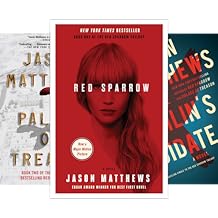 Then we went to the movies and caught a preview of Jennifer Lawrence's new project, "Red Sparrow." Don is no fan of JLaw but he's half in love with Charlotte Rampling who also appears in the film. We decided to give the book a try and read it simultaneously. I was a bit surprised that the author, Jason Matthews, used his own name, since he was a highly placed CIA operative for over thirty years and participated in clandestine recruitment operations around the globe. The authenticity of the novel makes for a fast-paced read that, even with some gratuitous violence, fills the bill for escapist lit.
Appropriately enough, Russia is the villain in this book. The action centers around CIA agent Nathaniel Nash, who's been the handler for a highly placed mole in the Russian bureaucracy. MARBLE, the spy, is aging and worries that his days as an informer are numbered. He would like to retire but the U.S. can't afford to relinquish this font of information.
Dominika Egorova is a Russian ballet prodigy whose talent and beauty draws the ire of her rivals, resulting in a Tonya Harding type attack which halts her career. In a humiliating fall from grace, and to ensure that her widowed mother is supported, Dominika follows her uncle's advice and applies for the Sparrow program in which young women are trained in the art of seduction in order to elicit information for Russian intelligence services.
Matthews often allows his condescending opinions of Russian spycraft to leak through his narrative, a common fault of Americans to underestimate our rivals, and one that we've recently learned can be truly detrimental to democracy. But the author does proffer the interesting premise that Dominika was born with a neurological disorder called synesthesia which enables her to read body language, see auras, and excel at math and languages. Not satisfied with being a glorified prostitute, Dominika parlays her intuitive talents into government promotions that put her and Nash on a collision course.
Several secondary characters stand out in this thriller, both Russian and American, and trying to decipher who's the valuable mole was great fun. I'm not sure if Don or I figured it out first. But what some reviewers found to be a distraction we most delighted in. Each chapter centered around a meal. I thought it was a device of the author's to indicate that no matter how close one is to danger, even death, the urge to nurture our bodies and enliven our conversations around the sharing of food never slackens. At the end of each chapter the author shares the recipe for whatever was eaten by his characters. Even in a safe house, awaiting news of an operation, Dominika recreates her family's comfort foods.
"Red Sparrow" is the first in a trilogy. I moved on to other realms but Don is sticking with it and promises that I'll soon be having Chicken Kiev for dinner. The film will be released next week. It may not be as cerebral as LeCarre but it will keep you up past your bedtime.
Then we went to the movies and caught a preview of Jennifer Lawrence's new project, "Red Sparrow." Don is no fan of JLaw but he's half in love with Charlotte Rampling who also appears in the film. We decided to give the book a try and read it simultaneously. I was a bit surprised that the author, Jason Matthews, used his own name, since he was a highly placed CIA operative for over thirty years and participated in clandestine recruitment operations around the globe. The authenticity of the novel makes for a fast-paced read that, even with some gratuitous violence, fills the bill for escapist lit.
Appropriately enough, Russia is the villain in this book. The action centers around CIA agent Nathaniel Nash, who's been the handler for a highly placed mole in the Russian bureaucracy. MARBLE, the spy, is aging and worries that his days as an informer are numbered. He would like to retire but the U.S. can't afford to relinquish this font of information.
Dominika Egorova is a Russian ballet prodigy whose talent and beauty draws the ire of her rivals, resulting in a Tonya Harding type attack which halts her career. In a humiliating fall from grace, and to ensure that her widowed mother is supported, Dominika follows her uncle's advice and applies for the Sparrow program in which young women are trained in the art of seduction in order to elicit information for Russian intelligence services.
Matthews often allows his condescending opinions of Russian spycraft to leak through his narrative, a common fault of Americans to underestimate our rivals, and one that we've recently learned can be truly detrimental to democracy. But the author does proffer the interesting premise that Dominika was born with a neurological disorder called synesthesia which enables her to read body language, see auras, and excel at math and languages. Not satisfied with being a glorified prostitute, Dominika parlays her intuitive talents into government promotions that put her and Nash on a collision course.
Several secondary characters stand out in this thriller, both Russian and American, and trying to decipher who's the valuable mole was great fun. I'm not sure if Don or I figured it out first. But what some reviewers found to be a distraction we most delighted in. Each chapter centered around a meal. I thought it was a device of the author's to indicate that no matter how close one is to danger, even death, the urge to nurture our bodies and enliven our conversations around the sharing of food never slackens. At the end of each chapter the author shares the recipe for whatever was eaten by his characters. Even in a safe house, awaiting news of an operation, Dominika recreates her family's comfort foods.
"Red Sparrow" is the first in a trilogy. I moved on to other realms but Don is sticking with it and promises that I'll soon be having Chicken Kiev for dinner. The film will be released next week. It may not be as cerebral as LeCarre but it will keep you up past your bedtime.
That IS the question! For me, right now, at this time in my life, I have discovered that reading is less a pleasure and more of a chore because almost everything I read is for a deadline. This is a truly debilitating state of affairs for someone who, from the age of maybe seven or eight, has preferred books to just about anyone else's company. True confession. This winter I've read and written reviews for five books about Florida for my radio program (http://news.wgcu.org/programs/florida-book-page) only to find that the web page is woefully outdated.
Then there is the ultimate joy, writing for "Library Journal" as a way to advise collection development librarians where to spend their hard-earned cash and where to save it for another day. I've read and reviewed three novels for them since the beginning of the year.
Where, you might ask, does that leave reading for pleasure? And what happens if I read a book for said pleasure and find that it isn't worth sharing with you readers? Currently I'm so far behind the eight ball that I've seriously considered bringing this book blog to a close before it becomes obsolete. But then...I hear from one or two of you with encouraging words and I read a book like the latest in the Armand Gamache Three Pines series by Louise Penny and I have to weigh in, just in case there's someone out there who hasn't fallen in love with this outstanding collection - thirteen now - that truly eludes categorization.  A New York Times book reviewer exclaimed, "Louise Penny wrote the book on escapist mysteries." What an outrageous put down cloaked in a compliment. There is nothing escapist about Penny's books. In fact she seems to delve deeper and deeper into the nuances of good and evil, black, white, and gray, with each entry in this stellar collection. And yes, you must read them in order! ("Still Life," 2005)
Inspector Armand Gamache may be at the titular heart of these novels but each secondary character is so fully drawn, so important to the fabric of the whole, that the death of one would diminish all. I listened to the latest book, "Glass Houses," and was treated to an interview with Penny at the end of the recording. Penny aficionados know that there is a great deal of sorrow behind these beautiful novels and it leaks through in the prose. There is something so poignant, so melancholy about the struggles of the characters that reflect the author's own issues with alcohol and the recent death of her beloved husband from complications of Alzheimer's disease.
The author has said that she views the fictional village of Three Pines, less than an hour from the Surete de Quebec where Gamache, along with his son-in-law Beauvoir, lead the province's crime fighting apparatus, as a refuge, a place called home. And it is truly one of the most delightful fictional villages of all time. My friend Cathy and I have said that, were it not so chilly, we would be happy to retire and die there. We each see ourselves as Myrna, the psychologist/book store owner, at least when we aren't closer to resembling the foul mouthed poet Ruth.
This entry in the series is exceptional. Penny has taken her hero, Gamache, and placed him in an untenable position. Established over the years as the epitome of honorability when all around him are failing, he now finds himself forced to use deception in a court of law, against all the beliefs he holds dear, in a gamble that will bring him accolades or prison. And he will take others down with him. Penny exhorts us to remember the bombing of Coventry or the Enola Gay. Terrible examples of times when those in power determined that the end justifies the mean. In this case she examines the opioid crisis, especially the increase in the trafficking of fentanyl. Escapist literature? I think not.
A New York Times book reviewer exclaimed, "Louise Penny wrote the book on escapist mysteries." What an outrageous put down cloaked in a compliment. There is nothing escapist about Penny's books. In fact she seems to delve deeper and deeper into the nuances of good and evil, black, white, and gray, with each entry in this stellar collection. And yes, you must read them in order! ("Still Life," 2005)
Inspector Armand Gamache may be at the titular heart of these novels but each secondary character is so fully drawn, so important to the fabric of the whole, that the death of one would diminish all. I listened to the latest book, "Glass Houses," and was treated to an interview with Penny at the end of the recording. Penny aficionados know that there is a great deal of sorrow behind these beautiful novels and it leaks through in the prose. There is something so poignant, so melancholy about the struggles of the characters that reflect the author's own issues with alcohol and the recent death of her beloved husband from complications of Alzheimer's disease.
The author has said that she views the fictional village of Three Pines, less than an hour from the Surete de Quebec where Gamache, along with his son-in-law Beauvoir, lead the province's crime fighting apparatus, as a refuge, a place called home. And it is truly one of the most delightful fictional villages of all time. My friend Cathy and I have said that, were it not so chilly, we would be happy to retire and die there. We each see ourselves as Myrna, the psychologist/book store owner, at least when we aren't closer to resembling the foul mouthed poet Ruth.
This entry in the series is exceptional. Penny has taken her hero, Gamache, and placed him in an untenable position. Established over the years as the epitome of honorability when all around him are failing, he now finds himself forced to use deception in a court of law, against all the beliefs he holds dear, in a gamble that will bring him accolades or prison. And he will take others down with him. Penny exhorts us to remember the bombing of Coventry or the Enola Gay. Terrible examples of times when those in power determined that the end justifies the mean. In this case she examines the opioid crisis, especially the increase in the trafficking of fentanyl. Escapist literature? I think not.
"Go-Saeng," is the Korean word for suffering. From her youngest days Sunja was reminded that this is a woman's lot and yes, author Min Jin Lee visits an extraordinary amount of loss and pain on this young woman. I often wonder if these kinds of well-meant warnings from elders don't set the tone for exactly the very thing we are warned about to happen.
Sunja is the much-loved only daughter of Hoonie and Yangjin, born in Yeongdo, Busan, Korea at the beginning of the twentieth century. The family runs a boarding house which, at five hundred square feet, is considered a small luxury, especially in light of the fact that Japan has annexed Korea to deleterious effect. Money is tight, food scarce, education rare.
And yet, from this sparse beginning, Lee creates a fascinating, multi-generational saga that enthralls even as it educates. I often look back at my own schooling and marvel at the holes. The politics and intricacies of the Asian world, pre-World War II, were simply not on our teachers' radar screens.
Min Jin Lee (https://www.minjinlee.com/about/), a Yale grad with a law degree from Georgetown, lived in Tokyo for four years while researching this passion project and it shows. The flavors of the food, the look and feel of the clothing, the street sounds, and the strength and courage of the people is evident throughout this amazing book. Min's writing style has a visual quality that would render this novel ripe for moviemaking. I sat down one afternoon and read 150 pages without even noting the time!
The plot is simple and certainly not new. Naïve and protected, as much by the boarders as by her parents, Sunja is entranced by a much older man with all the time in the world to convince Sunja that she is special. Of course, he is right. But she is sixteen and he is older than her father. When she joyously tells Hansu that she is pregnant he must admit that, though he will take care of her and the baby in Korea, he cannot marry her as he has a wife and children in Japan.
To Sunja's credit, she is sensible enough to realize that her mother's reputation and livelihood will suffer if word of her shameful state was to get out. But fate intervenes in the form of Pastor Isak Baek, a young Christian missionary on his way to his first posting in Osaka. He has been recuperating at the boardinghouse, nursed by Sunja and her mother, and he is not only grateful but half in love with the troubled young girl and the idea of a family.
From the joining of these two young people readers meet generations of immigrants torn between their Korean roots and their Japanese lives. Through their experiences as outsiders, people who are considered dirty, less educated, willing to do the work that their Japanese neighbors won't (sound familiar?) we get a lesson in the history of the fraught Japanese/Korean relationship and also a deep look at what it means to assimilate, to become a productive member of a country that will always keep you at arm's length.
I loved this novel and each character in it. Though Sunja's progeny attain education, business sense, and financial comfort, Min has actually written a paeon to women's strength and fortitude. They truly do hold up half the sky, and then some. A wonderful read!
Last week I finished a book that's been languishing on my kindle for way too long. I told Don I hated it. Then I proceeded to talk about it with him for half an hour. So, the question is, how can one hate a book that keeps percolating long after "the end?"
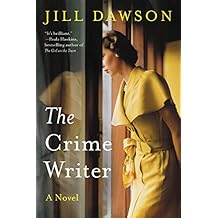 "The Crime Writer," by Jill Dawson (http://jilldawson.co.uk/) is that book. I violently disliked the characters even as I tried to get inside their heads. Jill Dawson did the same thing. This novel is one of that oh so popular genre I've dubbed fictional biography. Novelist Patricia Highsmith, best remembered for her Ripley series, is the subject of the book which is written like a novel within a novel. It is convoluted enough for the reader to wonder where the truth of Ms. Highsmith's life and the fiction differ. I'm still unsure of the ending and I reread it several times.
Truth: American novelist Patricia Highsmith, master of psychological, disturbing literature, moved to a bucolic country cottage in Suffolk, England, in order to complete work on two books. She wanted, in fact craved, complete privacy except for visits to and from her lover in London, an unhappy wife and mother named Sam. Fiction: What Highsmith got instead was a nosy neighbor and an aggressively pushy journalist, Virginia Smythson-Balby, who seems to show up unexpectedly and everywhere that Pat goes.
Pat Highsmith's reputation was as an extremely difficult person with whom to spend time. A raging alcoholic who still managed to put out an enviable trove of award-winning books, in the book she keeps up a running, angry, resentful commentary on the presence of "Ginny" Smythson-Balby, even as she encourages her to visit for drinks and chatter. The sense is that the stalker has become the stalked.
The catalyst for the crux of the story, a horrific crime of passion and the guilt that follows, is Sam, the somewhat reluctant lover. Torn between the easy luxury of her life as Mrs. Gerald Gosforth, even in light of spousal abuse, and the future she would face as Pat's partner, Sam hesitates to fully give herself to either Pat or the marriage, prompting Pat to act out in a way that one of her characters might. And then things get murky indeed.
Jill Dawson is especially brilliant when she examines guilt, how it eats at the soul, how it wreaks havoc on one's imagination, and how an act of evil yearns to come out into the open. The crime writer becomes the criminal and Jill Dawson becomes Patricia Highsmith, creating an atmosphere every bit as dark and evil as the one that suffused "The Talented Mr. Ripley."
"The Crime Writer," by Jill Dawson (http://jilldawson.co.uk/) is that book. I violently disliked the characters even as I tried to get inside their heads. Jill Dawson did the same thing. This novel is one of that oh so popular genre I've dubbed fictional biography. Novelist Patricia Highsmith, best remembered for her Ripley series, is the subject of the book which is written like a novel within a novel. It is convoluted enough for the reader to wonder where the truth of Ms. Highsmith's life and the fiction differ. I'm still unsure of the ending and I reread it several times.
Truth: American novelist Patricia Highsmith, master of psychological, disturbing literature, moved to a bucolic country cottage in Suffolk, England, in order to complete work on two books. She wanted, in fact craved, complete privacy except for visits to and from her lover in London, an unhappy wife and mother named Sam. Fiction: What Highsmith got instead was a nosy neighbor and an aggressively pushy journalist, Virginia Smythson-Balby, who seems to show up unexpectedly and everywhere that Pat goes.
Pat Highsmith's reputation was as an extremely difficult person with whom to spend time. A raging alcoholic who still managed to put out an enviable trove of award-winning books, in the book she keeps up a running, angry, resentful commentary on the presence of "Ginny" Smythson-Balby, even as she encourages her to visit for drinks and chatter. The sense is that the stalker has become the stalked.
The catalyst for the crux of the story, a horrific crime of passion and the guilt that follows, is Sam, the somewhat reluctant lover. Torn between the easy luxury of her life as Mrs. Gerald Gosforth, even in light of spousal abuse, and the future she would face as Pat's partner, Sam hesitates to fully give herself to either Pat or the marriage, prompting Pat to act out in a way that one of her characters might. And then things get murky indeed.
Jill Dawson is especially brilliant when she examines guilt, how it eats at the soul, how it wreaks havoc on one's imagination, and how an act of evil yearns to come out into the open. The crime writer becomes the criminal and Jill Dawson becomes Patricia Highsmith, creating an atmosphere every bit as dark and evil as the one that suffused "The Talented Mr. Ripley."
A new year of great reading is ahead and I can't wait to dig in. I've begun physical therapy for my broken shoulder - those of you who've been following me know all about that saga - and I have a feeling that I'll be back in full form by the end of the month. With my down time I've been continuing my never ending search for new Florida writers whose books I can tout on my radio review program (http://news.wgcu.org/programs/florida-book-page) and I'm pleased to say that I found a gem in Laura Lee Smith (https://lauraleesmith.com/)
When I saw that one of my all time favorite authors, Richard Russo, had written a blurb for her debut novel, "Heart of Palm," I knew that I was in. And what I love about Russo is the same thing that attracts me to Smith. She has a kind and forgiving heart, something we see too little of these days. Many of the characters Smith creates are deeply damaged, some may be beyond redemption, but she gives them second, third, and fourth chances and, as we get to know and understand them, so do we.
"Heart of Palm" opens with a tragedy that sets the tone for this 400 plus page family saga. Life rarely plays out the way we imagine it will and for the sprawling, brawling Bravo family, life made no exceptions. Bad boy Dean Bravo may capture the heart of St. Augustine's golden girl, Arla Bolton, but the guilt that he carries after disfiguring his beautiful, perfect wife in a boating accident on their honeymoon, informs the next four decades. In fact, as Arla's strength and acceptance of her fate blossoms, Dean's sense of self seems to diminish.
Though they'll raise four children in the rambling Bravo family homestead that sits on a glorious piece of Florida land hugging the inter-coastal waterway, secrets, lies, and plain old stubbornness will take their toll on the Bravos' marriage. Alcoholism plays a major roll in the unraveling of the family, so if your own life has been affected by this disease, you may find Smith's book to be an especially difficult read.
Still, the dialog is simply outstanding and there isn't one peripheral character in the entire novel. A few readers have faulted Smith for stereotyping certain Florida denizens but, for me, the big shot developer swanning in from out of town in his Mercedes, the pushy local realtor just trying to catch a break, or the impatient, overworked waitress at the local coffee shop are all just pitch perfect.
If you're looking for a book with an authentic sense of place and characters that you could throttle one minute and hug the next, if you're a fan of Pat Conroy or Richard Russo, then give this debut novel a go. If you're as enamored as I was then you can move on to Smith's new book, "The Ice House," which just came out. I'm halfway through and will let you know.


