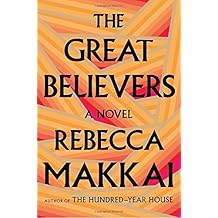
 If you believe that forgiveness is the ultimate act of love then Rebecca Makkai's remarkable new book, "The Great Believers," will feel deeply satisfying. This gorgeous novel takes readers back to the height of the AIDS epidemic in the '80's when paranoia was rampant and the so-called gay scourge tore families apart. It may be difficult for younger people to even remember what a horrible time that was. Some of us who are older probably read "And the Band Played On" by Randy Shilts and thought we knew everything there was to know. Makkai makes it personal.
The story begins in 1985 Chicago at a memorial service, the first of oh so many that will be held in the coming years, for Nico, a gay man who was the beating heart of his large group of friends, the first to fall ill. The only woman in attendance is Nico's beloved sister Fiona whose fate will be to bear witness to the suffering and death of too many young men.
Makkai fills her book with great characters, infuriating, caring, selfish, and ambitious, but the man we come to know intimately is Yale Tishman, naïve and trusting, yearning for a long-term relationship that includes a home with a picket fence, a pet, meals together at night in front of the TV. Instead, he has Charlie, a vain, life of the party, newspaper editor who preaches safe sex but doesn't practice it.
We toggle back and forth between late '80's Chicago as Yale pursues his career in art acquisition - a fascinating story in itself - and 2015 Paris. Fiona is the bridge. Fiona, a woman suffering from the trauma of losing everyone she's known and cared for. Is it possible that she's used up all the love she had to give? Unable to sustain her marriage, now estranged from her adult daughter, Fiona is on a mission to bridge the divide with her child and maybe even find a reservoir of compassion left for herself.
Throughout this poignant, heart breaking novel, Makkai reminds us of the history of the Act Up movement, the politics of the Reagan era, the slow move toward AIDS research before Hollywood got involved, and the fleeting hopes engendered when rumors surfaced of new drugs coming on the market. We witness the cruel reactions to the gay community of people who don't understand how the AIDS virus is spread, and we meet the unsung heroes, the nurses at the Cook County hospital, who cared so compassionately for these men in their final days.
Yes, the world has advanced considerably for the rights of the LGBTQ community over the past four decades but we cannot forget, Makkai reminds us. As with so many other civil rights issues we must remain constantly vigilant lest the ugly past resurface. "The Great Believers" is now number two on my 2018 favorites list.
 The author Richard Powers has been nominated for just about every award the literary world has to offer, and if you've read any of his work, it's easy to understand why. He is a versatile writer, deep and complicated and difficult to put in a box. His novels reflect his eclectic background in science, music, philosophy, literature, and technology. "The Overstory" combines all of his interests to form a cohesive whole that is a stunning work of imaginative prowess.
Powers' story transpires over the entire twentieth century beginning with a Norwegian immigrant, Jorgen Hoel, who moves with his pregnant wife from Brooklyn to Iowa. In his pockets are several chestnut seeds which he plants on the family farm, setting in motion this tale of nine seemingly unrelated characters whose lives will intersect decades down the road in a profoundly unsettling way.
At the same time that these people's lives twine together, the roots of the chestnut will branch and intertwine with other trees' roots to form one of the earth's oldest symbiotic relationships. The premise that trees feel, communicate, and protect each other and the insects and animals with which they interact, is put forth by Dr. Patricia Westerford, a hearing and speech-impaired young woman whose adoring father taught her everything she knows about the natural world. College was just the icing on the cake.
Powers takes his time introducing us to each of his protagonists in turn. From their childhoods, some lonely and solitary, others warm and loving, we learn what makes them tick. From the Vietnam veteran who parachuted into a banyan tree that held him in its arms for safety, to the computer geek and animator who's paralyzed by a fall from a not so sympathetic oak, each has a detailed biography.
In the northwest a movement is burgeoning. From California to Oregon and Washington, environmentalists are converging on areas of old growth forest destined for destruction by developers with visions of dollar signs dancing in their heads. These people, whom we now know intimately, arrive alone and together from various parts of the country to perform acts of civil disobedience. They lie down across roads, handcuff themselves to heavy equipment, climb into evergreens centuries old to protect our living, breathing ancestors from the chainsaws.
Though non-violence is the rule of thumb, as so often happens during acts of quiet protest, the authorities react badly to calm. Tear gas, beatings, and imprisonment ratchet up the stakes and soon, in a horrific act or eco-terrorism, a woman is killed and everyone is on the run.
Richard Powers poses many questions worthy of discussion, questions that will really make you see the world of nature, and of trees in particular, in a very different way. What responsibility do we have, he wonders, to the natural world that sustains us and the generations before and after us? How insignificant we human beings are in the grand scheme of things! After all, the rings of a fallen tree represent millennia.
I can't say enough about this amazing, thought-provoking novel. I know that it will make my top ten for 2018.
As my friend Don and I plan a late summer trip to Sicily and the Amalfi coast, I've been scrambling to brush up on my shaky Italian and to uncover some light, fun-filled books about Sicily. Author Mario Giordano offered exactly the right mood with the first in a series, "Auntie Poldi and the Sicilian Lions," based loosely upon the life of his own Aunt Poldi. Each is apparently a zoftig Bavarian widow of sixty with a lot of life left in them.
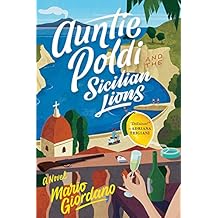 Poldi tends to depression, especially since the death of her Sicilian husband, but her in-laws encourage her to come south to the sun, sea, and glorious foods that Sicily offers. With the help of her nephew she barnstorms around the area of Catania and Mount Etna until she finds a home, one that speaks to her yogic sensibilities, in the village of Torre Archirafi.
Before long Poldi is the most talked about fixture in the town. Her curious, adventurous nature leads her to strike up conversations with everyone she meets, and though her original intent was to drink herself to death while gazing out to sea, she discovers that Sicily has renewed her lust for life, not to mention her lust for all the fine masculine specimens in the uniform of carabinieri.
When the sweet natured young man, Valentino, who helps Polidi around the house, disappears and is then found washed up on the beach with his face shot off, Poldi determines to find the murderer, even as the delicious Commissario Vito Montana warns her not to play Miss Marple. But play she does and a cat and mouse game ensues as Poldi worms her way into people's homes, enlists the aid of her sisters-in-law pulling surveillance at cafes in Taormina (cry me a river!), and generally manages to one-up the investigation of the frustrated commissario to whom she is wildly attracted.
Aunti Poldi may not be as loveable and erudite as Ma Ramotswe but she's bold and brash and a hoot to spend time with. And if you've ever been to Italy then you'll get such pleasure out of reading about the Catania fish market, the little patisseries (in fact Giordano already put me on to one a few blocks from out hotel in Catania), the local wines, and of course, the grappa. In spring of 2019 there will be a follow-up, "Aunti Poldi and the Vineyards of Etna," the first chapter of which was appended to my copy of Lions. Looks like Poldi and Vita may just be a thing!
My alarm still goes off several mornings a week because exercise class begins so darn early here in Maryland. I must have time to savor my coffee and read the paper before heading out, an act that is so upsetting lately that I NEED to go exercise just to work off the frustration. Thus, when it comes to reading for relaxation, I've had to modify my palate this year.
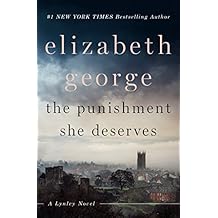 Murder mysteries always work, the more involved the better! I just finished listening to Simon Vance's dulcet British accent as he narrated Elizabeth George's latest Inspector Lynley novel, "The Punishment She Deserves." The quirky Barbara Havers simply shines in this book, as she's exiled to the north country, a college town called Ludlow, to rubber stamp an investigation into a suicide.
Accompanied by her boss's boss, DCS Isabelle Ardery, who would love nothing more than to fire Havers for her off beat methods, Barbara intuits that the suicide was not what it appears even as Ardery admonishes her to keep her mouth shut and just follow orders.
This long-running series with Lynley and Havers just keeps getting better as Ms. George tackles many thorny issues, in this case, pedophilia, rape, alcoholism, police corruption, and the list goes on. Episodes can also be seen on PBS if you're so inclined.
Do you all remember Rachel Joyce's "The Unlikely Pilgrimage of Harold Fry?" If so then you'll know that you can expect to be joyfully uplifted by anything Ms. Joyce writes and "The Music Shop" does not disappoint. This novel should appeal especially to those with an eclectic knowledge of and appreciation of music in all its forms, from Puccini to Springsteen. Much like a good librarian connects just the right book with the right person at the optimum time, Frank works the same magic in his recording booths.
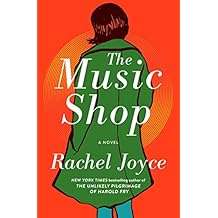 A luddite of sorts, Frank insists that vinyl is the only proper way to get music from machine to ear to heart. No CD's for him! Of course, this attitude limits business traffic and worries friends in the down-at-heels London neighborhood that a developer has his destructive eye on.
Frank is a conundrum, a mystery man whose solitary life unfolds slowly throughout the novel, so it's no surprise that he'd be attracted to Ilse Brauchmann, another mysterious character with no discernible history, who faints outside the music shop one day. She quickly disappears but returns weeks later to say thank you for the kindness of the staff and offer her help in the music shop. She and Frank dance around their attraction to each other, miscommunication ensues, until finally Ilse offers to pay for Frank's time so that he can share his love and joy in the healing power of music with her.
And then there's the latest novel from prolific writer Anthony Horowitz of Foyle's War and Midsomer Murders fame. "The Word Is Murder," written in a rather disconcerting format, places Anthony at the center of the action as a novelist writing a book about a murder. I'll admit that it took me a few chapter readings to adjust. In the novel Horowitz is between writing gigs and has agreed to pen a biography of a disgraced copper named Daniel Hawthorne who is working on a case independent of the local police department whose skills Hawthorne derides.
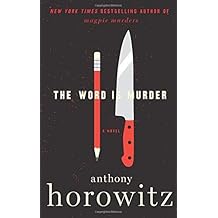 Horowitz and Hawthorne are oil and water so much of the reading fun involves watching the slippery ways that Hawthorne eludes his biographer, refusing to share even minor details about his life's work. The case involves Diana Cowper, a wealthy socialite and mother to a famously disagreeable rock star. Only hours after she visits a non-descript mortuary to arrange for her future funeral Cowper is found dead at home with a curtain cord bound around her neck. Why would anyone want to hurt this paragon of the community?
There are so many red herrings and diversions that I defy you to read this book and guess the ending before it unfolds. Normally I can ferret out the culprit around two thirds of the way through a novel, but not this time. The characters are a nasty bunch but their motivations seems just beyond reach. Let me know if you're surprised at the denouement.
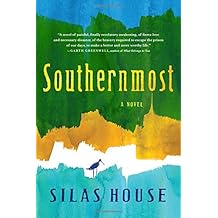 The author Silas House has been on my radar screen for a long time, he's been writing consistently for almost twenty years, often mentioning Lee Smith as one of his mentors. So I wonder why I'm only just now getting around to reading one of his novels? Perhaps it was my constant quest for books to review for the Florida Book Page (http://news.wgcu.org/programs/florida-book-page) that finally brought me to him and his new book "Southernmost," the title a reference to that concrete buoy at the tip of Key West that signals the farthest southern latitude in the continental United States - a ubiquitous lure for selfie aficionados.
Mr. House is billed as a "southern writer," a term that seems limiting, and yet one that we readers get immediately. His writing style is relaxed, conversations feel folksy. But this simplicity doesn't hide his penchant for vividly painted details and gorgeous descriptions of the natural world, the likely result of his work as an environmental activist, when he isn't teaching writing at Berea College that is, or advocating for gender rights issues. https://www.nytimes.com/2014/10/23/opinion/the-battle-for-gay-rights-in-rural-america.html?_r=0
As the book opens, a devastating flood is ravishing the small Tennessee town where Asher Sharp is the local preacher, the man everyone turns to for support in all things great and small. Farms, animals, and whole homes are swept away in a tragedy of biblical proportions just as Pastor Asher has begun to question his belief in a just, loving, but sometimes vengeful God. His crisis of faith drives a wedge between him and his more rigidly pious wife Lydia, a wedge that becomes a chasm when she refuses to shelter a gay couple that have just lost everything to the tumultuous storm.
Though Jimmy and Stephen risked their lives to rescue neighbors and were the ones who found Lydia and Asher's boy Justin before the waters swallowed him up, the couple was shunned by everyone except Asher and his sensitive boy when they appeared together for Sunday services. In a moment of righteous anger Asher lashes out at his congregation for their paucity of generosity, their meanness of spirit. A woman with a cell phone captures Asher crying tears of frustration as he exhorts his people to open their hearts and a viral post on the internet becomes the catalyst for all the sorrow and miscommunication that follows.
Just spending time with Justin, so bright, articulate, and hyper-sensitive to emotional imbalance, is worth the time you spend in this book. Silas House writes with generosity and a keen understanding of the human condition, delicately exploring the loss of a belief system, the ways in which our past informs our present, the damage parents can do in the name of love, and the ways in which we form new, non-traditional families to replace our broken ones.


