Sunday, March 25, 2018

Amy Bloom's White Houses

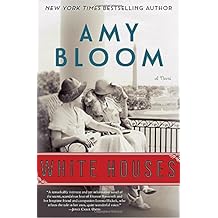
White Houses: A NovelRight out of the gate I'll tell you that I have very  mixed feelings about Amy Bloom's latest novel - I reiterate, it is a novel - about the journalist Lorena Hickok and her long relationship with Eleanor Roosevelt. "White Houses" is another in a very popular genre that I call "fictional biography," a genre that began ten years ago with Nancy Horan's "Loving Frank," but which I now believe has been done to death. 

Bloom's novel is beautifully written and is based upon serious research at the FDR library at Hyde Park in New York state and also the highly regarded three volume biography of Eleanor by Blanche Wiesen Cook. But there's something disconcertingly disingenuous about putting fictional words in real peoples' mouths that bothers me as a reader.

That said, I think that Bloom does real justice to the figure of Lorena Hickok, a woman who grew up in extreme poverty, yet worked her way up to become a well-regarded journalist and newspaper woman who was covering then Governor Franklin Roosevelt as he launched his first presidential run. In so doing, she met and fell deeply in love with the refined, shy Eleanor. Ostensibly they were as different as two people could possibly be and yet they drew from each other's strengths.

It's no secret that Franklin was a ladies' man extraordinaire both before and after he was stricken with polio and that his infidelity was very painful for Eleanor. Still, she was his eyes and ears, his conscience and confidant and I believe that they, too, deeply loved one another. What a conundrum. Still, after Franklin's election, Hick, as Lorena was known, became a permanent fixture at the White House, living there for months or even years at a time. She had to give up her hard-won career in journalism as her objectivity was now clouded by her proximity to the first couple, and she always felt that she was there on sufferance.

Bloom deftly addresses the infuriating hypocrisy, still present today, of the double standard for sexual behavior between men and women. Eleanor and Hick's relationship made the president vulnerable to blackmail and undue influence, yet his own dalliances with other women were accepted and condoned. And then there were the "kids" and their disapproval which strained the women's bond as well. How terribly difficult it is to be your true self when under public scrutiny! But Eleanor and Hick endured.

For readers who love all things Eleanor, this novel will be a must read I'm sure. I've no doubt that book groups will devour it.  Me? I prefer the real thing and, though it will be time consuming, I'll dip into the definitive Cook biography for true reading pleasure

Sunday, March 18, 2018

An Italian Party in Costa Rica

Here we are in the glorious Costa Rican countryside where a feisty rooster gave me a 6 am wake-up call this morning, so why am I writing about a book set in Italy? It seems, according to Good Reads, that there's very little fiction set in Costa Rica that isn't hot Latina romance. Nothing wrong with that but...not what I was looking for. So I went to my Kindle, where I've downloaded tons of new books from gracious publishers, and hit on "The Italian Party," which will be out next week.

Author Christina Lynch has lived and worked in Milan and wrote for the Harvard Lampoon, but it's the four years she spent in Tuscany that she draws on for her debut novel. It's set in one of my favorite cities, Siena, in 1956, and the jaunty book cover belies the sensitive subject matter of this lovely novel that examines The Italian Party: A Novelall forms of love, betrayal and forgiveness. 
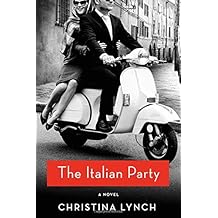
Scottie and Michael, newlyweds who know absolutely nothing about each other - remember it's the fifties and Scottie's only goal at Vassar was to gather up that Mrs degree.  -  set up house in a glorious apartment overlooking the main campo. Scottie's only duty is to stay safely indoors, learn to cook, and smile brightly when Michael comes through the door in the evening.

Thankfully, that doesn't even last a day! Michael, you see, is CIA and is in Italy to fight communism for the good old USA while maintaining the pretense of selling modern farm equipment to local farmers for Ford. Left to her own devices, Scottie explores her surroundings, falling in love with the language, the people, and the food, or as the government fears from its agents and their families, going native. I love her for it! She's smart, savvy, and could be Michael's greatest asset if he'd just open up to her.

But Michael has more fundamental secrets that he's harboring and Scottie has a big one of her own. With Michael frequently off to Rome for meetings with Ambassador Claire Booth Luce and his CIA handler Duncan, an old friend from Yale, Scottie involves herself in the lives and mysteries of the locals, falling hard for her landlord and investigating the sudden disappearance of Robertino, her tutor and friend. 

With the upcoming Palio, the famous Siena horse race, as a colorful back drop and the cold war tensions between Russia, Italy, and the United States to add real life intensity, Lynch not only takes us into the hearts of the Sienese people but she illustrates how how easy it is for our government to manipulate foreign elections with well-placed "fake news" pieces. Very timely!

She sensitively examines the complications of marriages, new ones and old ones, the damage that lies and half truths can inflict on relationships, and the ability to accept and forgive those we care about. This is a lovely first novel that will make you want to run right out and book your flight to Italy!



Thursday, March 1, 2018

Serendipity in The Wine Lover's Daughter

I've just completed a milestone. My last book discussion! For five years after  retirement I have continued to lead a wonderfully opinionated group of deep readers who frequent the South County Regional Library in Estero, Florida, in talks about the latest literature on the scene. In fact a friend who attended today reminded me that she had been at my first discussion twenty-five years ago! Often I have been a nervous wreck prior to the discussions but, oh, when they are over - what elation! What a sense of satisfaction.

It's just that I feel less and less able to make commitments a year in advance. Life is so fragile and so wondrous. What if someone asks me to take a last minute trip to France or Italy? Am I going to say no because I have a book discussion? I think not. But today, I went out in style with an astounding sixty-some participants all chatting about one of my favorite novels of all time, "A Gentleman in Moscow."

While reading and thinking about this remarkable book I often used the word "serendipity." How many times do you learn some trivial little fact from your reading, put it away in your noggin, and then suddenly see reference to it everywhere? I just love it when that happens. In this case it was a bottle of wine, a premier cru called Chateau d'Yquem. Count Rostov, the gentleman of the book title, fell in love over his first taste of this wine. And then I discovered that writer, reviewer, oenophile, and renowned radio personality Clifton Fadiman also fell in love over the same bottle!

Yes, I am dating myself, but I do remember Clifton Fadiman. He also was a judge for the Book of the Month club for many years, even after he lost his eyesight. And I remember reading all of Anne Fadiman's books and essays, enjoying the fact that she was editor of the Phi Beta Kappa quarterly "The American Scholar." Every year at budget time I had to fight to keep that one in the library!

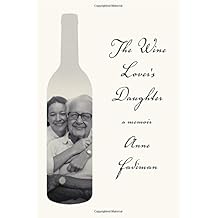
The Wine Lover's Daughter: A MemoirAnne has recently completed a delightful memoir of her father and his life-long obsession with wine. And though she claims to detest the taste of wine herself - the lady may protest too much - she is in all ways "The Wine Lover's Daughter." Anne and her dad were very close and the love and respect she feels for him is palpable. Still she manages to be objective when speaking about this man who was a product of his times, a time when a woman's opinion or career took a back seat to the man's. Anne's mother had an amazing career as a war correspondent and journalist before marrying Fadiman - http://nyti.ms/2FIpc8P - but quietly took on the role of wife and mother afterward.

Fadiman also examines her father's unhealthy insecurities about being a Jewish man in the WASP world of books and publishing. In the '30's and '40's there was a quota for graduate school seats and though Fadiman had graduated from Columbia Phi Beta Kappa himself, he struggled with money and self esteem. Anne believes that his infatuation with wine collecting was a way for her father to boost his sense of self-worth, to indicate to society that he had "made it." And he did truly become known as one of the finest hosts and raconteurs between California and New York.

The elder Fadimans chose to end their days right here on Captiva and Sanibel Islands. This is where Clifton lost his eyesight and would have despaired if it hadn't been for the Lee County Library System's Talking Books library and their partnership with the Visually Impaired Persons of Southwest Florida. I was so pleased and proud that Ms. Fadiman chose to devote several chapters to her father's new lease on life after joining this wonderful group where he was treated like a VIP and made lasting friendships. I remember hearing Fadiman's name mentioned as one of our patrons when I first began work for the library system. Reading this memoir brought the last twenty-five years full circle.

If you're a reader, a history buff, or a wine lover you'll be especially enamored of this small but informative memoir.

Saturday, February 24, 2018

Red Sparrow - The Book or the Movie?

My friend Don and I love to listen to audio books when we are on long trips. I suggested that we download John LeCarre's latest novel, "A Legacy of Spies," since we binged out on MI-5 a few years ago. But the LeCarre has been a slog and is frankly just too complex to be appreciated when driving in seasonal traffic in southwest Florida. We found that we kept replaying sections over and over again to "get it."

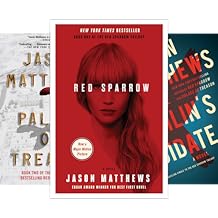
The Red Sparrow Trilogy (3 Book Series)Then we went to the movies and caught a preview of Jennifer Lawrence's new project, "Red Sparrow." Don is no fan of JLaw but he's half in love with Charlotte Rampling who also appears in the film. We decided to give the book a try and read it simultaneously. I was a bit surprised that the author, Jason Matthews, used his own name, since he was a highly placed CIA operative for over thirty years and participated in clandestine recruitment operations around the globe. The authenticity of the novel makes for a fast-paced read that, even with some gratuitous violence, fills the bill for escapist lit.

Appropriately enough, Russia is the villain in this book. The action centers around CIA agent Nathaniel Nash, who's been the handler for a highly placed mole in the Russian bureaucracy. MARBLE, the spy, is aging and worries that his days as an informer are numbered. He would like to retire but the U.S. can't afford to relinquish this font of information.

Dominika Egorova is a Russian ballet prodigy whose talent and beauty draws the ire of her rivals, resulting in a Tonya Harding type attack which halts her career. In a humiliating fall from grace, and to ensure that her widowed mother is supported, Dominika follows her uncle's advice and applies for the Sparrow program in which young women are trained in the art of seduction in order to elicit information for Russian intelligence services.

Matthews often allows his condescending opinions of Russian spycraft to leak through his narrative, a common fault of Americans to underestimate our rivals, and one that we've recently learned can be truly detrimental to democracy. But the author does proffer the interesting premise that Dominika was born with a neurological disorder called synesthesia which enables her to read body language, see auras, and excel at math and languages. Not satisfied with being a glorified prostitute, Dominika parlays her intuitive talents into government promotions that put her and Nash on a collision course.

Several secondary characters stand out in this thriller, both Russian and American, and trying to decipher who's the valuable mole was great fun. I'm not sure if Don or I figured it out first. But what some reviewers found to be a distraction we most delighted in. Each chapter centered around a meal. I thought it was a device of the author's to indicate that no matter how close one is to danger, even death, the urge to nurture our bodies and enliven our conversations around the sharing of food never slackens. At the end of each chapter the author shares the recipe for whatever was eaten by his characters. Even in a safe house, awaiting news of an operation, Dominika recreates her family's comfort foods.

"Red Sparrow" is the first in a trilogy. I moved on to other realms but Don is sticking with it and promises that I'll soon be having Chicken Kiev for dinner. The film will be released next week. It may not be as cerebral as LeCarre but it will keep you up past your bedtime.

Friday, February 16, 2018

To Write or Not to Write?

That IS the question! For me, right now, at this time in my life, I have discovered that reading is less a pleasure and more of a chore because almost everything I read is for a deadline. This is a truly debilitating state of affairs for someone who, from the age of maybe seven or eight, has preferred books to just about anyone else's company. True confession. This winter I've read and written reviews for five books about Florida for my radio program (http://news.wgcu.org/programs/florida-book-page) only to find that the web page is woefully outdated.

Then there is the ultimate joy, writing for "Library Journal" as a way to advise collection development librarians where to spend their hard-earned cash and where to save it for another day. I've read and reviewed three novels for them since the beginning of the year.

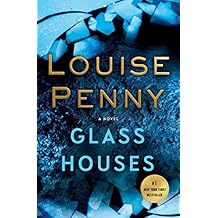
Where, you might ask, does that leave reading for pleasure? And what happens if I read a book for said pleasure and find that it isn't worth sharing with you readers? Currently I'm so far behind the eight ball that I've seriously considered bringing this book blog to a close before it becomes obsolete. But then...I hear from one or two of you with encouraging words and I read a book like the latest in the Armand Gamache Three Pines series by Louise Penny and I  have to weigh in, just in case there's someone out there who hasn't fallen in love with this outstanding collection - thirteen now - that truly eludes categorization. Glass Houses: A Novel (Chief Inspector Gamache Novel)


A New York Times book reviewer exclaimed, "Louise Penny wrote the book on escapist mysteries." What an outrageous put down cloaked in a compliment. There is nothing escapist about Penny's books. In fact she seems to delve deeper and deeper into the nuances of good and evil, black, white, and gray, with each entry in this stellar collection. And yes, you must read them in order! ("Still Life," 2005)

Inspector Armand Gamache may be at the titular heart of these novels but each secondary character is so fully drawn, so important to the fabric of the whole, that the death of one would diminish all. I listened to the latest book, "Glass Houses," and was treated to an interview with Penny at the end of the recording. Penny aficionados know that there is a great deal of sorrow behind these beautiful novels and it leaks through in the prose. There is something so poignant, so melancholy about the struggles of the characters that reflect the author's own issues with alcohol and the recent death of her beloved husband from complications of Alzheimer's disease.

The author has said that she views the fictional village of Three Pines, less than an hour from the Surete de Quebec where Gamache, along with his son-in-law Beauvoir, lead the province's crime fighting apparatus, as a refuge, a place called home. And it is truly one of the most delightful fictional villages of all time. My friend Cathy and I have said that, were it not so chilly, we would be happy to retire and die there. We each see ourselves as Myrna, the psychologist/book store owner, at least when we aren't closer to resembling the foul mouthed poet Ruth.

This entry in the series is exceptional. Penny has taken her hero, Gamache, and placed him in an untenable position. Established over the years as the epitome of honorability when all around him are failing, he now finds himself forced to use deception in a court of law, against all the beliefs he holds dear, in a gamble that will bring him accolades or prison. And he will take others down with him. Penny exhorts us to remember the bombing of Coventry or the Enola Gay. Terrible examples of times when those in power determined that the end justifies the mean. In this case she examines the opioid crisis, especially the increase in the trafficking of fentanyl. Escapist literature? I think not.