Showing posts with label southern fiction. Show all posts

Wednesday, March 9, 2016

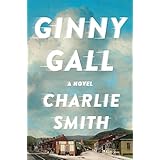
Ginny Gall - Or Another Term for a Long Season in Hell

Common wisdom tells us that if we truly want to know another person, culture, or way of life, we must walk a mile in those shoes. If Ta-Nahisi Coates' version of being a black man in the United States (http://bit.ly/1JLnMVb) is too harsh, and you would prefer to do your learning through fiction, then have I got the book for you!
 
Product Details
 
 
The richest, lushest novel that I've read so far this year comes from an author, Charlie Smith, with whom I wasn't familiar, though he's won prizes galore. He is renowned as both a poet and a novelist so you shouldn't be surprised at the pure lyricism of his writing style. Even when the tale itself is teeming with brutality, cruelty, sorrow, and unspeakable yearning, it is so beautifully told that you simply cannot put it down.
 
I fell in love with Delvin Walker from the moment his mother, Capable Florence, pushed his "gummy little bushy-haired head" out of her body while climbing the back porch steps of her Chattanooga, Mississippi, shack. It was July, 1913, and though they were free blacks on paper, Jim Crow laws insured that there were no opportunities for women like Cappie who turned tricks in the old slave quarters to feed her brood of babies.
 
But Cappie had a gift that she shared with Delvin, stories. Tales of knights and palaces and kings lulled Delvin to sleep in the afternoons. By the age of four he was teaching himself to read from the funny papers left outside the general store. He dreamed that he would travel, see far-flung places, and succeed in the white world. Yet we sense, from the first paragraph of this incredible book, that life won't be easy for this dreamy, naïve boy.
 
Smith is so damn good that he lures us with his mesmerizing words (at least the optimists like me) into believing that maybe this time things can be different. After Cappie disappears, a loss that will haunt Delvin all his days, a wonderfully interesting man rescues Delvin, taking him in, teaching him to love Shakespeare, and to honor the living and the dead. Mr. Oliver, you see, runs the town's only Negro funeral home and he bestows a selfless generosity on young Delvin that of course, is too good to last.
 
Whispers of lynchings, followed by the burning of a Negro church, and an ugly incident with some white boys, which may or may not have ended in a death, set Delvin on a lifelong path of running, returning, and running again. Riding the rails from state to state, Delvin falls in hopeless love with a woman he can never win, learns the truth of America's black history from a professor with a traveling museum, and has his spirit crushed but not broken in a prison cell.
 
This masterful novel, written by a white man from Georgia, is truly a gift for anyone who wants to spend some time inside the mind,  body, and yes, the shoes, of a man who, because of the color of his skin, will never reap even the simplest American benefits, life, liberty, and the pursuit of happiness.

Tuesday, August 18, 2015

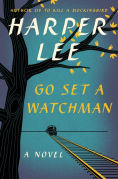
Go Set a Watchman, Weighing in on the Controversy

fpo

A judge in Alabama ruled that Harper Lee was capable of making her own decision regarding the release of a controversial "new" novel, one that is, in fact, a precursor to the 1960 Pulitzer Prize-winning "To Kill a Mockingbird." I regretfully say that I believe he erred.

I have been following the controversy surrounding "Go Set a Watchman" for so long now that I feel like an expert. But who really knows another's heart? Perhaps Harper's phenomenal sister Alice, a practicing lawyer into her '90's, who was Ms. Lee's watchman. From what I've read, this book deal was signed scarcely two weeks after Alice Lee's death at the age of 103. And someone is making pots of money.

If it's true that Watchman was actually a preliminary draft of Mockingbird, submitted for publication, sent back to the author, and reworked, then it makes perfect sense and I can appreciate it for what it is. It reads like a very personal cri de Coeur from a 20-something woman who is trying to understand her place in the world. How many of us have felt that we didn't fit in, physically or psychologically, with the place where we were raised?

Ironic indeed that Harper Lee, who as Jean Louise Finch in Watchman, leaves college and moves to New York City where she can hide among millions, ends up living out her life in Maycomb, Alabama, protected and respected by those she reviled. In fact there's an extremely funny, beautifully written scene in Watchman, where Jean Louise, forced by her stern Aunt Alexandra to hold a coffee gathering for the magpies (as she calls the women in town), writes two running conversations, the women speaking of trivialities and Jean's stream of consciousness replies, the ones she would LIKE to give.

The strongest chapters are those in which Jean Louise reflects on her childhood as Scout, the girl readers fell in love with in Mockingbird. These are so heartfelt and real that one can understand why her editor asked her to rewrite Watchman from the point of view of Scout. Maybe Ms. Lee did it chafing at the bit, but she did what she was told and earned a Pulitzer for the result.

Of course the issue that's got most Mockingbird aficionados upset is Atticus. I suspect that the majority of complainants have never even read the book. They only see the very black and white film version of Atticus embodied by Gregory Peck. Yes, he was a knight on a white horse, but hardly the nuanced character of Ms. Lee's novel. Scout had no mother to turn to. Inevitably she positioned her father on a pedestal so high that he couldn't help but fall off eventually. And fall he does in Watchman.

Jean Louise follows Atticus to a Sunday afternoon meeting at the very courthouse where she admired him as a child. Only this time he is not defending a young black man from a falsified rape charge, he is leading a meeting of the Citizens Council, a group formed to foil the integrationist results of the recently won Supreme Court case of Brown v. Board of Education.

Physically ill at the thought of her father, and her fiancé Henry, sharing a stage and a philosophy with racists, Jean Louise goes into a tirade that becomes a complex and disingenuous discussion of states rights. But there's nothing to hide the fact that Atticus, though a believer in equal justice under the law, does not believe that Negro people are equal to whites socially or intellectually. As ugly as it sounds, this is a realistic portrayal of most white men in the south in the 1960's and, dare I say it, even to this day.

"Go Tell a Watchman" is a much darker novel than "To Kill A Mockingbird," written by a woman who, I believe, was trying to sort out her own beliefs through her fiction. It's the work of a journeyman feeling her way and should be read as such. Mockingbird was a winner with the public because it made white people feel so self-satisfied. In Watchman, we don't look nearly so good.