It's been two weeks since my sister Cynthia and I made our annual trek to the National Book Festival in Washington, D.C. I've been remiss in not writing about it sooner but you'll forgive me for having a minor stress meltdown as I waited to hear if my home had withstood the devastating Hurricane Irma. It did, though now we wait to see which paths the next two storms will take.
I'm guessing it had to do with the unseasonably cold, wet weather of Labor Day weekend, but the Walter Washington Convention Center was overflowing with book lovers. I've never seen it, even during Book Expo America, so jammed with people. Lines for every speaker ran round corners and through empty rooms, minimum waits ran forty five minutes. People were patient, they talked books with their neighbors or read what they had already purchased while standing in line. Never fear the demise of literacy.
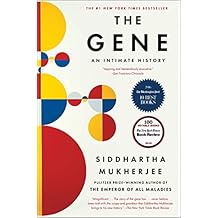 My sister ran right to David McCullough but I had my sights set on Siddhartha Mukherjee. Having devoured "The Emperor of All Maladies," I was anxious to hear what the renowned cancer researcher had to say about genetic testing as it relates to disease. Though "The Gene, An Intimate History," looks daunting, Dr. Mukherjee spoke to his interviewer and the audience in clear, layman's terms. With the calm and kindness of doctors like Abraham Verghese or Atul Gawande, he explained that his book had begun as a very personal family story, a search for the genetic propensity to clinical depression. Instead, it became a broader history of the double edged sword that gene research has become, from the evil of forced sterilization (the story of Carrie Buck, https://en.wikipedia.org/wiki/Carrie_Buck), to the targeted therapies now being formulated to treat individual cancers.
 Another non-fiction writer whose presentation took me completely by surprise was New York Times opinion writer and three time Pulitzer Prize winner, Thomas Friedman. This was not a man to be tethered to a podium! He strode with purpose back and forth across the stage, engaging the audience with humor and aplomb. He shared the back story to the title of his latest book, "Thank You For Being Late," a plea to slow down and listen to our fellow humans even as we increasingly dance to the frenetic music of technology.
Friedman spoke of the new and unusual relationships he's formed since he made the conscious effort to take an extra five minutes to engage with people he would ordinarily be "too busy" to bother with. He spoke of the year 2007 as if it were a "supernova," filled with a remarkable accretion of technological advances that have pushed us beyond our wildest imaginings. And though he exhorts us to take time to smell the roses, Mr. Friedman also instilled fear in me when he opined that a young person entering college today will find that, by the student's senior year, much of what he or she learned to that point will already be outmoded. How does one even live with that kind of pressure?
And, speaking of pressure, I have a review due tomorrow for Library Journal on a book that I just finished yesterday, Elif Shafak's "Three Daughters of Eve." After I work on that I'll continue with this saga of my day in D.C. with the three authors I was able to hear in the afternoon.
The Library of Congress's annual National Book Festival was started by First Lady Laura Bush, drawing wonderfully diverse crowds from Virginia, Maryland, and the District of Columbia. Three years ago, as the National Park Service realized that the lawns of the national mall were being beaten down to nothing but dirt, a decision was made to move the festival indoors to the Walter Washington Convention Center. I was worried that it would lose the ambiance of the outdoor setting, with the Smithsonian castle and the Washington monument in the background, but it thrived at the convention center and many more people could be accommodated. That is, until this year.
For some reason the roster of eminent fiction writers seemed to get short shrift and the large ballroom on the second floor was reserved for historians and super stars. (Shonda Rimes, Bob Woodward, Kareem Abdul-Jabbar) Other years one could come and go throughout the various venues since speakers often overlap, but this year lines formed outside the smaller rooms set aside for fiction writers, many so long that I thought I'd mistakenly ended up at Disney World.
Doors were locked until one presentation ended and another began. While chatting in the hour-long line for Richard Russo with some other book lovers, I found that they could not get in to see many of their favorites, Carl Hiaasen and Colson Whitehead among them. This is especially shocking in light of the fact that Whitehead, as an Oprah pick, was bound to attract a standing room only crowd.
Having worked for years on the Southwest Florida Reading Festival, I understand how difficult it is to please all the people, all the time.One has to make difficult choices. In fact, there were three people I wanted to hear at noon! But even though the new system meant that we couldn't interact with as many authors as we would have liked, (not even Mary Roach had seating space), my sister, my friend Don and I had a great afternoon, even finding ourselves within a couple of feet of Salman Rushdie at one point.
Yes! I did get to listen to one of my all time favorite writers. Richard Russo's "Straight Man" will always stand out for me as one of the best sendups of academia ever written and Russo admitted that it was the easiest novel he ever sat down to write. Of course, he was mostly asked about "Everybody's Fool," the sequel to "Nobody's Fool," and about his penchant for writing about the failing towns in upstate New York that he spent his entire life trying to escape from.
The questions were especially apropos, the interviewer pointed out, because of the current political climate that seems to pit blue collar workers, shut out from factory jobs that have disappeared and unable to reinvent themselves, against college educated folks with more resources. Russo did an admirable job of fielding a charged opportunity to trash one presidential candidate or the other, by saying that he wasn't inclined to alienate half of his audience, drawing appreciative laughs.
Russo was thoughtful and kind. I had no doubt that he would be. He treats each quirky character he creates, no matter how deplorable (if I may use that word), as someone loveable and redeemable. He told the audience that his best known anti-hero, Sully, played in the film, "Nobody's Fool," by Paul Newman, was based upon his dad, something I guess I should have picked up on but hadn't.
What's next? He has two books in the hopper, one a collection of short stories, and the kernel of an idea that may evolve into his next novel. In the meantime, he asks, can we please just read a little slower?
I've been involved in hundreds of reading festivals, author talks, and conferences over my years as a librarian and there's one thing I always dread, the Q and A. Is there even one original question left to ask of a writer after he or she has finished his presentation? I cringe when I hear someone get up to the microphone and ask, "what does your writing day look like?" or "how do you come up with the ideas for your characters?" OY!
Worse yet is when a questioner rambles on about himself, the book he's in the middle of, how to retain a publisher, etc. So, kudos to Lisa See for the amazing self-restraint she showed last Saturday after her very funny, a good bit bawdy, and extremely informative talk at the National Book Festival.
 Touting her recently released novel, "China Dolls," Ms. See began her presentation with an anecdote from the evening prior to the festival when a woman who was seated at her dinner table asked her why she always wrote about China. She proceeded to explain her family's genealogy, tracing back over several generations, and then spoke about how mixed-race children tend to identify with one side of the family over the other. It has to do with those around you, she explained, and she has 400 relatives on her father's Chinese side.
When she was finished, moderator Ron Charles from the Washington Post called anxious audience members to the microphone to ask their questions. The first one? You got it. Prefacing his question with words like, "this might seem like an inappropriate question...." I'd have stopped him in his tracks right there. You know, if it looks like a duck.....However, Ms. See, a better person than I, let him go on and sure enough, he had the gall to say, "you don't look Chinese."
To her credit, after chastising him lightly for missing the beginning of her presentation, she took the opportunity to provide a lesson in cultural awareness, identity and prejudice. The audience was mighty pleased. http://www.lisasee.com/
By the way, if you were not able to attend the National Book Festival but would like to know more about the authors and their presentations, the Library of Congress does a great job of taping and webcasting for your enjoyment. It may take a week or two for this year's authors to be up on their website but you can always entertain yourself with videos of previous years while you wait. http://www.loc.gov/bookfest/ Enjoy!


