Showing posts with label national book festival. Show all posts

Monday, September 18, 2017

National Book Festival, Continued

I spent the afternoon at the National Book Festival in the presence of three amazing writers, each with wildly different books, who spoke as if they had met the night before and calibrated their talks to include one specific theme, telling our stories. Women's stories. Black women's stories.


Margot Lee Shetterly is an awe-inspiring speaker. She teaches in Charlottesville, Va., and I admit to envying any student who lands in one of her classes. But of course she was there to discuss her remarkably successful first book "Hidden Figures." All the stars must have lined up just so for Ms. Shetterly. She admitted that she was dumbfounded to discover that her publisher had a bid on the film rights for the story before the book had even been written! And, unlike so many of her predecessors, her experience with the film industry was rewarding and actually fun.

Surely there is no one reading this who isn't familiar with the story of the women, the "human computers," who worked at NASA during the cold war, helping to put a man into space. Kathryn Johnson, Mary Jackson, Dorothy Vaughn, were tops in their classes at historically black universities like Hampton Institute, Virginia State, and Wilberforce in Ohio. Their untold stories are now known around the world. Ms. Shetterly was coy about what she's working on next but I can tell you, whatever it is, it will be a must read.

I have been following Jesmyn Ward since she brought me to my knees with her National Book Award winning "Salvage the Bones." http://bit.ly/2xcEnCM What a special delight to find that she was being interviewed by my favorite book reviewer, Ron Charles of The Washington Post.


Apparently he, too, was blown away by this young woman's work. He compared Ward's new novel, "Sing, Unburied, Sing," to Toni Morrison's "Beloved," without batting an eye. Once again Ms. Ward writes about folks in the margins, on the edge, people whose stories would be missing from history without her clear-eyed focus on their grace, strength, and character. Single mothers, grandparents acting as parents, and imprisoned fathers, people whose circumstances are beyond most of our comprehension, are the subjects of Ward's books. They may not be easy to read but they are necessary if we are ever to develop empathy for our fellow wanderers on this earth. I started it yesterday. Will keep you posted.
 
And what does one say about that bad feminist and difficult woman, Roxane Gay? A standing room only crowd laughed knowingly at her political jabs (take that you hillbilly elegist) and were perhaps just a bit taken aback by the smattering of four letter words that she let rip. But what else can Gay do with her anger? Well, she can write. And that she does. I reviewed her memoir "Hunger" not too long ago and can tell you that any time she puts her pen to paper Roxane Gay will tear your heart out.
 
The point is that only she can share her story, a not unfamiliar one that involves rape and its aftermath. Only she can tell you why she ate and ate, avoiding her family's efforts to intervene as her body bloomed. She does not want our sympathy or even our understanding. Writing was the catharsis that likely saved her life. Don't tell her about diet and exercise and don't offer prayers. She's comfortable with herself now, thank you very much. Roxane Gay is a force to be reckoned with. Look for her next work to be in graphic novels.


Sunday, September 17, 2017

Library of Congress's National Book Festival

It's been two weeks since my sister Cynthia and I made our annual trek to the National Book Festival in Washington, D.C. I've been remiss in not writing about it sooner but you'll forgive me for having a minor stress meltdown as I waited to hear if my home had withstood the devastating Hurricane Irma. It did, though now we wait to see which paths the next two storms will take.

I'm guessing it had to do with the unseasonably cold, wet weather of Labor Day weekend, but the Walter Washington Convention Center was overflowing with book lovers. I've never seen it, even during Book Expo America, so jammed with people. Lines for every speaker ran round corners and through empty rooms, minimum waits ran forty five minutes. People were patient, they talked books with their neighbors or read what they had already purchased while standing in line. Never fear the demise of literacy.

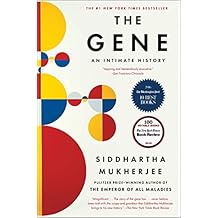
Product DetailsMy sister ran right to David McCullough but I had my sights set on Siddhartha Mukherjee. Having devoured "The Emperor of All Maladies," I was anxious to hear what the renowned cancer researcher had to say about genetic testing as it relates to disease. Though "The Gene, An Intimate History," looks daunting, Dr. Mukherjee spoke to his interviewer and the audience in clear, layman's terms. With the calm and kindness of doctors like Abraham Verghese or Atul Gawande, he explained that his book had begun as a very personal family story, a search for the genetic propensity to clinical depression. Instead, it became a broader history of the double edged sword that gene research has become, from the evil of forced sterilization (the story of Carrie Buck, https://en.wikipedia.org/wiki/Carrie_Buck), to the targeted therapies now being formulated to treat individual cancers.


Another non-fiction writer whose presentation took me completely by surprise was New York Times opinion writer and three time Pulitzer Prize winner, Thomas Friedman. This was not a man to be tethered to a podium! He strode with purpose back and forth across the stage, engaging the audience with humor and aplomb. He shared the back story to the title of his latest book, "Thank You For Being Late," a plea to slow down and listen to our fellow humans even as we increasingly dance to the frenetic music of technology.

Friedman spoke of the new and unusual relationships he's formed since he made the conscious effort to take an extra five minutes to engage with people he would ordinarily be "too busy" to bother with. He spoke of the year 2007 as if it were a "supernova," filled with a remarkable accretion of technological advances that have pushed us beyond our wildest imaginings. And though he exhorts us to take time to smell the roses, Mr. Friedman also instilled fear in me when he opined that a young person entering college today will find that, by the student's senior year, much of what he or she learned to that point will already be outmoded. How does one even live with that kind of pressure?

And, speaking of pressure, I have a review due tomorrow for Library Journal on a book that I just finished yesterday, Elif Shafak's "Three Daughters of Eve." After I work on that I'll continue with this saga of my day in D.C. with the three authors I was able to hear in the afternoon.


Monday, September 26, 2016

National Book Festival 2016

The Library of Congress's annual National Book Festival was started by First Lady Laura Bush, drawing wonderfully diverse crowds from Virginia, Maryland, and the District of Columbia. Three years ago, as the National Park Service realized that the lawns of the national mall were being beaten down to nothing but dirt, a decision was made to move the festival indoors to the Walter Washington Convention Center. I was worried that it would lose the ambiance of the outdoor setting, with the Smithsonian castle and the Washington monument in the background, but it thrived at the convention center and many more people could be accommodated. That is, until this year.

For some reason the roster of eminent fiction writers seemed to get short shrift and the large ballroom on the second floor was reserved for historians and super stars. (Shonda Rimes, Bob Woodward, Kareem Abdul-Jabbar) Other years one could come and go throughout the various venues since speakers often overlap, but this year lines formed outside the smaller rooms set aside for fiction writers, many so long that I thought I'd mistakenly ended up at Disney World.

Doors were locked until one presentation ended and another began. While chatting in the hour-long line for Richard Russo with some other book lovers, I found that they could not get in to see many of their favorites, Carl Hiaasen and Colson Whitehead among them. This is especially shocking in light of the fact that Whitehead, as an Oprah pick, was bound to attract a standing room only crowd.

Having worked for years on the Southwest Florida Reading Festival, I understand how difficult it is to please all the people, all the time.One has to make difficult choices. In fact, there were three people I wanted to hear at noon! But even though the new system meant that we couldn't interact with as many authors as we would have liked, (not even Mary Roach had seating space), my sister, my friend Don and I had a great afternoon, even finding ourselves within a couple of feet of Salman Rushdie at one point.

 
Yes! I did get to listen to one of my all time favorite writers. Richard Russo's "Straight Man" will always stand out for me as one of the best sendups of academia ever written and Russo admitted that it was the easiest novel he ever sat down to write. Of course, he was mostly asked about "Everybody's Fool," the sequel to "Nobody's Fool," and about his penchant for writing about the failing towns in upstate New York that he spent his entire life trying to escape from.

The questions were especially apropos, the interviewer pointed out, because of the current political climate that seems to pit blue collar workers, shut out from factory jobs that have disappeared and unable to reinvent themselves, against college educated folks with more resources. Russo did an admirable job of fielding a charged opportunity to trash one presidential candidate or the other, by saying that he wasn't inclined to alienate half of his audience, drawing appreciative laughs.

Russo was thoughtful and kind. I had no doubt that he would be. He treats each quirky character he creates, no matter how deplorable (if I may use that word), as someone loveable and redeemable. He told the audience that his best known anti-hero, Sully, played in the film, "Nobody's Fool," by Paul Newman, was based upon his dad, something I guess I should have picked up on but hadn't.

What's next? He has two books in the hopper, one a collection of short stories, and the kernel of an idea that may evolve into his next novel. In the meantime, he asks, can we please just read a little slower?


Monday, September 7, 2015

First Impressions of the National Book Festival

If anything good came out of the eight-year Bush administration it was librarian Laura's decision to create the National Book Festival! What a glorious celebration of reading and literacy. Watching so many families, of every make and model, thrilling at the chance to meet writers and buy books lifts the heart of this librarian every time. Of course, I'm most proud of the festival that I actually had a hand in - patting my own back now - my own library system's Southwest Florida Reading Festival. www.readfest.org

Needless to say, having all the resources of Washington, DC, and the Library of Congress goes a long way to insuring attendance by the finest writers in the land. This year was no exception. The move from the national mall to the Walter Washington Convention center, which saddened me for just a moment or two, has proved to be inspired. Huge ballrooms accommodate the crowds and video will soon be posted on www.loc.gov/bookfest

Louise Erdrich

I had planned my day carefully, fully expecting the women whose writing inspires me, Lousie Erdrich and Marilynne Robinson, to be the pinnacle of the event. Instead, it was the men who shined. Perhaps it was the format, which we've used at our own festival at some authors' request, but it seemed stilted. Many authors do not want the pressure of giving a half hour address and prefer the Q and A, interview approach.

Marilynne Robinson

The interviewers in this case were experienced, thoughtful, and prepared, yet the writers seemed to hold back emotionally. Marie Arana, former editor of the "Washington Post Book World," interviewed Erdrich who received this year's award for the body of her work. Erdrich's genealogical background includes Ojibwe Indian and that native culture informs much of her work. Her latest novel (2012), "The Round House," was a stunning piece of literature which I reviewed here: http://bit.ly/1qD3Xbl

Though Arana had to drag it out of her, Erdrich did speak a little bit about some of the wonderful secondary characters who emerged from this novel, also getting her to admit that there is another book about these interesting, complex people forthcoming. Whew! I couldn't help but think that Erdrich hadn't had enough coffee yet.

Robinson on the other hand, was just plain stingy. Ron Charles, who I often mention as one of the finest reviewers working today, also at the "Washington Post," tried valiantly to elicit some kind of emotion from the Pulitzer Prize winner, to the consternation of the audience. He asked several open-ended questions that she shut down with single word answers and at one point, when Charles posited a particularly probing query, Robinson actually said,

"That's a good question."

To which he replied, "Good, because I'm dying up here."

The audience roared in sympathy.

Now I understand that writing is a solitary endeavor. I'm sure that many writers find the required book tours daunting. As introverts, they likely feel uncomfortable touting their books like carnival barkers. I get that. If you read any of Ms. Robinson's incredible works you'll gather that she's hardly an extrovert. Even her writing is quiet. I reviewed her most recent book "Lila," here: http://bit.ly/1QkuA0h

But, if one accepts a speaking engagement, then I believe that person has an obligation to the hundreds of fans who get up early, drive 45 minutes to the metro, spend another half hour on the train, to be inspiring, to be engaging, to be present. And that, unfortunately, was just not the case Saturday.

Tomorrow, though, I'll tell you about the men who knocked my socks off: Phil Klay, Marlon James, Bryan Stephenson, and Viet Than Nguyen, kudos to you!

Thursday, September 4, 2014

Lisa See, Most Patient Writer Ever or National Book Festival, Part 3

I've been involved in hundreds of reading festivals, author talks, and conferences over my years as a librarian and there's one thing I always dread, the Q and A. Is there even one original question left to ask of a writer after he or she has finished his presentation? I cringe when I hear someone get up to the microphone and ask, "what does your writing day look like?" or "how do you come up with the ideas for your characters?" OY!

Worse yet is when a questioner rambles on about himself, the book he's in the middle of, how to retain a publisher, etc. So, kudos to Lisa See for the amazing self-restraint she showed last Saturday after her very funny, a good bit bawdy, and extremely informative talk at the National Book Festival.

Lisa See

Touting her recently released novel, "China Dolls," Ms. See began her presentation with an anecdote from the evening prior to the festival when a woman who was seated at her dinner table asked her why she always wrote about China. She proceeded to explain her family's genealogy, tracing back over several generations, and then spoke about how mixed-race children tend to identify with one side of the family over the other. It has to do with those around you, she explained, and she has 400 relatives on her father's Chinese side.

When she was finished, moderator Ron Charles from the Washington Post called anxious audience members to the microphone to ask their questions. The first one? You got it. Prefacing his question with words like, "this might seem like an inappropriate question...." I'd have stopped him in his tracks right there. You know, if it looks like a duck.....However, Ms. See, a better person than I, let him go on and sure enough, he had the gall to say, "you don't look Chinese."

To her credit, after chastising him lightly for missing the beginning of her presentation, she took the opportunity to provide a lesson in cultural awareness, identity and prejudice. The audience was mighty pleased. http://www.lisasee.com/

By the way, if you were not able to attend the National Book Festival but would like to know more about the authors and their presentations, the Library of Congress does a great job of taping and webcasting for your enjoyment. It may take a week or two for this year's authors to be up on their website but you can always entertain yourself with videos of previous years while you wait. http://www.loc.gov/bookfest/ Enjoy!

Monday, September 1, 2014

National Book Festival 2014, Part 2

I first read a book by E. L. Doctorow back in the '70's when I belonged to the Book of the Month Club. Remember that? I have no recollection of which book it was, but I've been a fan ever since. Last year I led a book discussion of his classic "Ragtime," but I think that "Homer and Langley" is my favorite so far.

Image of E. L. Doctorow

So there was no way that I wasn't going to break my retirement rule of sleeping until my body clock wakes me, to get down to the DC convention center by 10:00 a.m. in time to see the rather frail eighty-three-year-old receive the Library of Congress Prize for American Fiction. According to his interviewer, Marie Arana, former editor of the Book World for "The Washington Post," Mr. Doctorow is still writing at the top of his game. Simply remarkable! His latest novel, "Andrew's Brain," is now on my lengthier by the day "to read" list, along with an old one that I missed but which peaked my interest as he spoke, "The Book of Daniel."

My sister and I stayed in the ballroom, patiently waiting for Doctorow's fans to file out, so that we could move to the very front of the room to bask in the glorious aura that emanates from Ishmael Beah. This man fascinates me. When I used to ruminate on the seemingly unfathomable resilience of the human spirit, Anne Frank usually came to mind. Now it's Ishmael Beah.


I had the great privilege of reviewing Mr. Beah's first novel, "The Radiance of Tomorrow," for "Library Journal." I knew of his history as a child soldier forced to take up arms against his own people during the civil war in Sierra Leone. I had heard him interviewed on the Diane Rehm show and felt, for certain, that I could not read his memoir, "A Long Way Gone." Yet I also knew that, in order to pronounce on his novel, I would need to immerse myself in the full context of his life, no matter how painful that would be.
 
My verdict on the novel, one sentence, was definitive:
 
"Beah, who broke our hearts with the haunting memoir of his life as a boy soldier (Long Way Gone), will render readers speechless with the radiance of his storytelling in this novel of grace, forgiveness, and a vision of a tomorrow without conflict."

Mr. Beah is a beautiful speaker. He talks of language with overt reverence, of his family's long tradition of storytelling with love and longing in his body. He will, he says, return to Sierra Leone to live and to raise his children when the time comes. We understand. The opportunities that have been afforded him by his life in the United States, though life-changing, cannot compete with the love of his homeland.

This is a man who will never forget the past. He uses his renown and money to work for his foundation, http://www.beahfound.org/ which helps children whose lives are decimated by war, rebuild, find solace, and generate hope for a more radiant tomorrow.


Sunday, August 31, 2014

National Book Festival 2014, Part 1

The locals were concerned about the National Book Festival's move from the green, green grass of the mall in front of the Smithsonian to the Washington Convention Center. No need. The grass was no longer green anyway (a problem that will soon be remedied), and on a 90 degree day in the District of Columbia, with showers threatening, there was no better place than the convention center to celebrate books and reading.

For my sister Cynthia, it was the culmination of a dream. The minute the list of speakers' names was released and civil rights icon, Representative John Lewis's name was included, she made her plans to visit. I warned her as best I could.

"There's thousands of people there Cynth, you may not get to talk with him, you may only see him from afar, blah, blah, blah...."

I should never have underestimated her. As we came off the escalator, well ahead of the crowd in order to get a front-row seat, there he was! Minus an entourage, no secret service, she soon had his ear, into which she whispered, "I bless the day you were born."


I admit that when he rose for the first of three standing ovations, my eyes misted over. We were witnessing living history. The cause for all the attention is the story of John Lewis's life and work in the civil rights movement written for a new generation as a graphic novel called "March." This is the first volume in a projected trilogy, the brainchild of Andrew Aydin, a comic book aficionado, and member of Representative Lewis's staff.

The book has already won numerous awards and has been added to required reading lists in schools across the country. But that isn't what made yesterday's presentation so memorable. It was the passion of the two speakers and the obvious affection they have for one another that choked me up.

It was so gratifying to see this history maker from my generation interacting with and igniting the mind of someone decades younger, a thirty-something who gets it and who, we feel assured, will take up the mantle when the time comes. The struggle for equal rights in the United States continues unabated, but today I feel more confident that the work will go on long after we children of the sixties are gone.

Though being in the same room with Representative Lewis was the highlight of our day, there are many more fantastic speakers to write about, not to mention all the friends we ran into among the throngs of bookies. More on that tomorrow.