Showing posts with label Paris. Show all posts

Friday, July 17, 2015

Two Quiet Novels of Unrequited Love

The Love Song of Miss Queenie Hennessy

From English writer Rachel Joyce whose novel "The Unlikely Pilgrimage of Harold Fry" was a runaway bestseller, book club darling, and nominee for the Man Booker Prize, comes a complementary book about Queenie Hennessy, the catalyst for Harold's unlikely walk across England.

I wrote glowingly of Joyce's first novel ( http://bit.ly/1I9lMdq ) and am pleased to tell you that this, her third, is every bit as warm, loving, and heartfelt. But, it cannot stand alone. You must read Harold first to fully appreciate the story Queenie Hennessy dictates from her bed in the hospice at Berwick-upon-Tweed.

Part memoir, part confessional, Queenie's letter is to Harold. The marvelously quirky denizens of the hospice are in a state of high expectation as the news media conflates Harold's once very private, penitential 600 mile walk to ask Queenie's forgiveness before she succumbs to the ravages of cancer. But Ms. Hennessy believes that she's the one who needs to seek absolution and in so doing we readers meet a woman of passion subsumed, of love deepened by twenty years of a life alone but not lonely. If you believe that giving love is a reward in itself, whether or not it is returned, then this is the book for you.

On the other hand, if you think that twenty years is way too much time to spend pining for a lost love, then hop on board Monsieur Perdu's floating bookstore and travel with him and his unlikely followers down the Seine to Provence. Nina George's "The Little Paris Bookshop," though not as much a love song to books as I had hoped, is still a delightful summer confection.  

Medium

Jean Perdu has the heart of the best librarians. He can talk with a customer for only a few minutes and deduce exactly which book to prescribe. He considers himself an apothecary, yet this physician cannot heal himself. He is, as his name suggests, lost. Eschewing human contact, he lives on his book barge with his cats, wondering why the love of his life, Manon, left him all those years ago. We learn that Manon did send him a letter of explanation but, stubborn to the core, Perdu had set the letter aside, preferring to suffer in silence.

Not until he overhears his neighbor, Catherine, sobbing over her pending divorce does his heart begin to feel twinges of life. He suggests books. She asks him to dinner. He lends her a table. She unearths Manon's twenty year old letter and gives it back to him. What he learns sends him on a journey of discovery south to Manon's home village.

Along the way he picks up and discards various strays, not just animals but wonderfully colorful characters, like those living in Queenie's hospice, from whom Jean absorbs the wisdom of life's lessons. It is so gratifying to watch Jean's rebirth, to feel the joy as he discovers the pleasure of his physical self and the body he has left languishing for so long. Life can begin at any age if we just open our hearts and minds to it. Thank you  Nina George for the reminder.

Wednesday, November 5, 2014

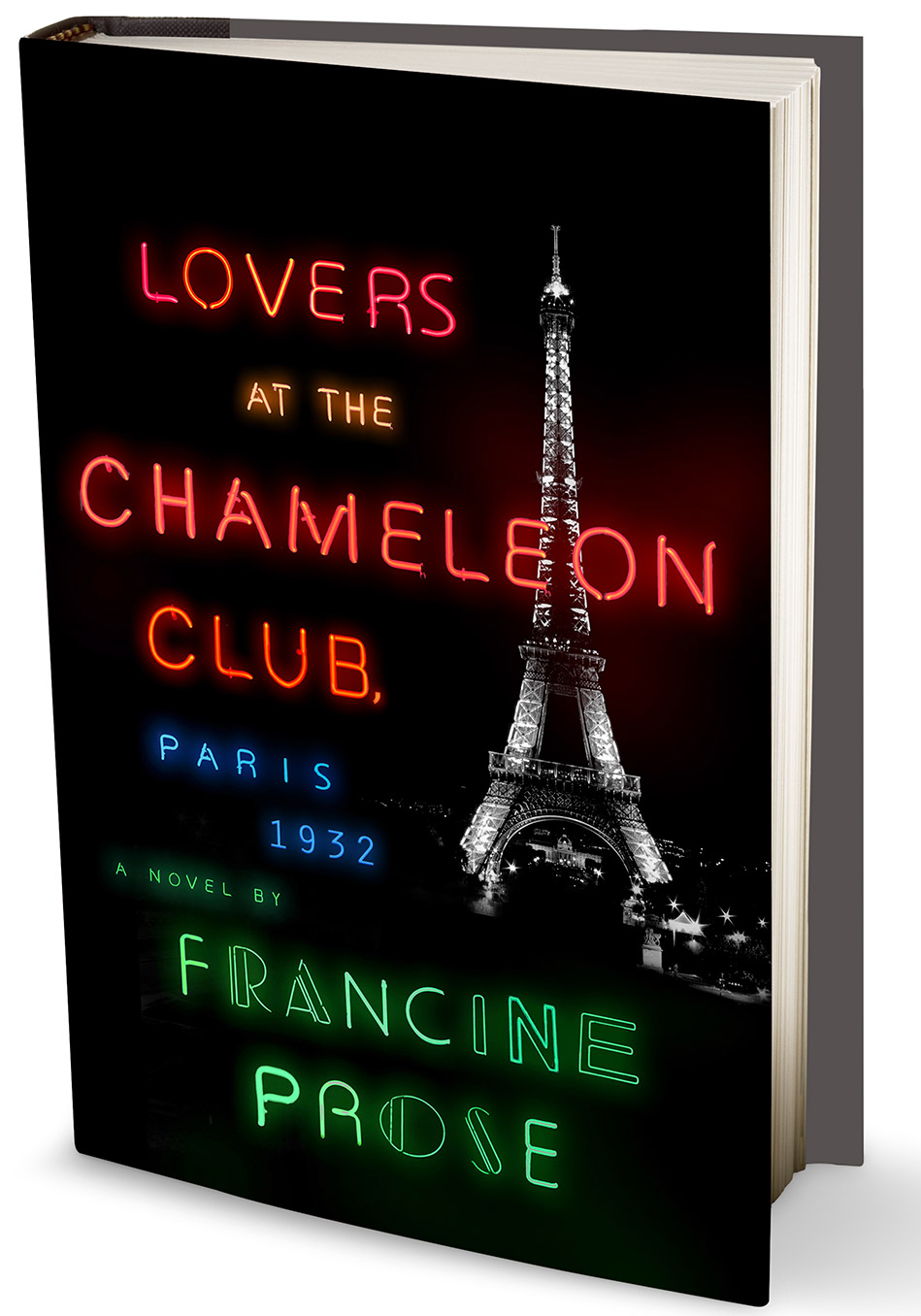
Lovers at the Chameleon Club, Paris 1932

It's never easy for me to bypass a book that has a photo of the Eiffel Tower gracing its cover, so the new Francine Prose was a must read.

Lovers at the Chameleon Club, Paris 1932
 
Ms. Prose is a prolific and thoughtful writer whose books have intrigued me for years. Many of her works examine the duality of our human natures. I'm thinking of "A Changed Man," a story about a Neo-Nazi hoping to atone for his transgressions, or "Blue Angel," in which an aging literature professor tries to regain his glory days through the talent of a young, off-limits student.
 
With "Lovers at the Chameleon Club," Francine Prose steps fully and confidently into the historical fiction genre while retaining the nuanced psychological probing into the nature of evil. She builds slowly, but you'll be rewarded magnificently if you have patience and stay the course.
 
Multiple narrators, each with a very distinctive voice, tell the story which covers almost eighty years. Prose shifts her writing style every time she changes point of view, an amazing feat which I've enjoyed ever since Barbara Kingsolver used it in "The Poisonwood Bible." So we have a mash-up of young people, Gabor, a Hungarian photographer and his future wife Susanne, Lionel, an American writer, and Lily de Rossignol, the baroness with a passion for the arts, who thrill to the 1930's nightlife of a vibrant, all-encompassing Paris.
 
And all paths cross at the Chameleon Club where, like its color-shifting namesake lizard, men and women are free to be, for an evening at least, who they really are, gay, lesbian, transgender, cross-dressing human beings. It's here that Gabor will take the infamous photo, Lovers at the Chameleon Club, that will kick start his career and bring unwanted attention to the subject of that picture, Lou Villars.
 
 
I love a novel that makes you start to search for background material and there's a ton of it here. It seems that Prose based her Chameleon Club on a famous lesbian underground nightclub called Le Monocle. http://rarehistoricalphotos.com/le-monocle-1932/  And, I'm afraid that once I saw the above picture, Lou Villars was firmly planted in my mind.
 
Lou is a tragic figure in this novel, a young girl who never felt comfortable in her skin. A young woman who wanted to compete in sports with men. She loved women and though she was cared for in return, relationships didn't seem to last. Business ventures failed. Down on her luck, she was ripe for seduction, not for sex but for a stronger drive, love of country.
 
France, you see, was in a bad place. Prose describes it this way: "The very same government that, by raising taxes, permitting uncontrolled immigration, weakening the military, failing to control the national debt, and fostering skyrocketing unemployment, was making it impossible for them to feed their families and provide better lives for their children."
 
Sound familiar? Yes, many Frenchmen, like Villars, could only see one way forward, an easy fix, a return to conservatism.  As the Nazi storm troopers moved inexorably toward Paris many truly believed that Germany was coming to help France regain its pride of place in Europe. Lou was one of these.
 
Of course, historically we know how the story ends. Yet this amazing novel had me on the edge of my seat wondering and sadly asking, could it happen again? Could it happen here? Francine Prose is at the top of her game here as she tackles war, politics, art, sexual identity, loyalty and love. I see a book discussion in my future.