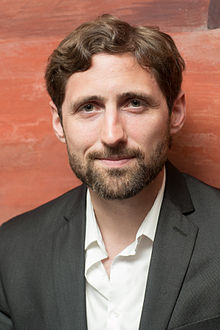
 Phil Klay has garnered several important awards for his collection of short stories culled from his year serving in the Marine Corps as a Public Affairs Officer in Anbar Province. "Redeployment," which I reviewed last February (http://bit.ly/1L1Vl9o) is a stunning book, a perfect marriage of an MFA from Hunter College and a year in Iraq.
I was so pleased that Klay was on the agenda at the National Book Festival but, being a great writer doesn't always translate into being a powerful presenter. I'm here to tell you, Phil Klay was electric. I'd guess that he has some acting chops in his background because when he read his stories he was as animated as the sign language interpreters who are phenomenal. It made me sorry that he isn't the narrator on the audio versions of the book.
Klay's stories ring of despair. We sit at the shoulder of a young man hoisting his rifle to shoot at a stray dog because he's angry and the dog is the only moving thing upon which he can vent that rage. Why is he this way? Because he doesn't know where he is or why he's there. He can't distinguish who is the "enemy" or even why they're the enemy. He knows that someone killed his friend and so the young man kills in return.
The chaos of war, the wasted money, the decimated bodies, the scrambled brains, are vividly portrayed, and when the author uses humor it is very dark indeed. The message seems incongruous coming from such a sunny personality. I wish that I could have stayed in my seat for the Q and A but I was racing to meet my sister in the front row of Bryan Stevenson's talk about his foundation, The Equal Justice Initiative. www.eji.org
Now here is a man whose life's work involves despair, yet he exudes hope from every pore. A Harvard educated lawyer, Stevenson took an internship in Georgia that changed him forever. The criminal justice system in the United States, the death penalty, mass incarceration, and incarceration of juveniles, are all in his sights and if anyone can make a change, I believe, after listening to him speak and watching the audience, that he could be the one. He received the only standing ovation of the day.
His book, "Just Mercy, A Story of Justice and Redemption," addresses this country's shameful history of accusing, trying, and sentencing to prison the most vulnerable among us, young, poor, and black. In particular, Stevenson concentrates on the story of Walter McMillian, the victim of corrupt police, judges, and lawyers, who was sentenced to death row for a murder he didn't commit.
You might think that this kind of travesty is a thing of the past, but you'd be wrong. We Americans jail more people, proportionally, than any other country in the developed world, children, the mentally challenged, and the innocent among them. Stevenson spoke eloquently about some of his most emotional cases and few of us were dry-eyed. He was generous with his time when answering questions and signing books. Here's my sister to prove it.
Phil Klay has garnered several important awards for his collection of short stories culled from his year serving in the Marine Corps as a Public Affairs Officer in Anbar Province. "Redeployment," which I reviewed last February (http://bit.ly/1L1Vl9o) is a stunning book, a perfect marriage of an MFA from Hunter College and a year in Iraq.
I was so pleased that Klay was on the agenda at the National Book Festival but, being a great writer doesn't always translate into being a powerful presenter. I'm here to tell you, Phil Klay was electric. I'd guess that he has some acting chops in his background because when he read his stories he was as animated as the sign language interpreters who are phenomenal. It made me sorry that he isn't the narrator on the audio versions of the book.
Klay's stories ring of despair. We sit at the shoulder of a young man hoisting his rifle to shoot at a stray dog because he's angry and the dog is the only moving thing upon which he can vent that rage. Why is he this way? Because he doesn't know where he is or why he's there. He can't distinguish who is the "enemy" or even why they're the enemy. He knows that someone killed his friend and so the young man kills in return.
The chaos of war, the wasted money, the decimated bodies, the scrambled brains, are vividly portrayed, and when the author uses humor it is very dark indeed. The message seems incongruous coming from such a sunny personality. I wish that I could have stayed in my seat for the Q and A but I was racing to meet my sister in the front row of Bryan Stevenson's talk about his foundation, The Equal Justice Initiative. www.eji.org
Now here is a man whose life's work involves despair, yet he exudes hope from every pore. A Harvard educated lawyer, Stevenson took an internship in Georgia that changed him forever. The criminal justice system in the United States, the death penalty, mass incarceration, and incarceration of juveniles, are all in his sights and if anyone can make a change, I believe, after listening to him speak and watching the audience, that he could be the one. He received the only standing ovation of the day.
His book, "Just Mercy, A Story of Justice and Redemption," addresses this country's shameful history of accusing, trying, and sentencing to prison the most vulnerable among us, young, poor, and black. In particular, Stevenson concentrates on the story of Walter McMillian, the victim of corrupt police, judges, and lawyers, who was sentenced to death row for a murder he didn't commit.
You might think that this kind of travesty is a thing of the past, but you'd be wrong. We Americans jail more people, proportionally, than any other country in the developed world, children, the mentally challenged, and the innocent among them. Stevenson spoke eloquently about some of his most emotional cases and few of us were dry-eyed. He was generous with his time when answering questions and signing books. Here's my sister to prove it.

I've recently returned from the frozen tundra of mid-winter Ohio where the love of family and friends helped to keep me warm as we sat with my brother Alan during his final days. He was only sixty-three years old and I'll admit that I did plenty of interior raging at what I perceived as the outrageous unfairness of his devastating cancer diagnosis.
Yet, simultaneously, I happened to be reading Phil Klay's National Book Award winning collection of short stories, "Redeployment," about the Iraq war and its aftermath. It helped to put my thoughts into perspective. My brother has a glorious legacy, a wife who will always love him, four wonderfully unique children, and six amazing grandchildren.
What if, I wondered, his life had veered down a very different path back in the late '60's, early '70's when the draft lottery was implemented. How well I remember the night my college buddies and I hung breathless in front of the TV watching our futures be determined by a rolling metal basket full of numbers. The Vietnam War was raging. Some would go halfway across the world to fight a battle they didn't even believe in based upon the fluke of a glass capsule in a cage. My brother was spared.
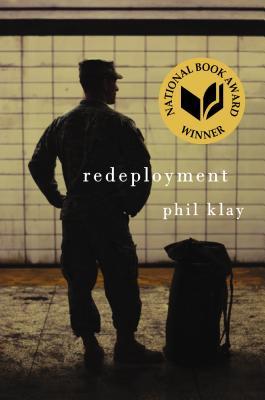
Not so fortunate are the boys Klay introduces us to. One could say that the difference is that these kids signed up. Full of the jingoistic passion that permeated the country after the Sept. 11th attacks of 2001, 18-year-olds were falling over themselves to join the Marines. Or were they? As Michael Moore pointed out so eloquently in his film, Fahrenheit 9/11, those who go to war today can often be lottery losers as well. Today's lottery is a matter of economics. Those with advantages stay home and get more advantages. Those without, go to war.
The strongest story in the collection is undoubtedly the first, the title story, "Redeployment." It's a heartbreaking rendering of a soldier returning to the states after a nine month tour in Iraq and the stream of consciousness thought process he goes through as he contemplates the reunion with his wife and their dog. The awkwardness as husband and wife try to avoid any serious conversation, plying each other with platitudes, is palpable. When he takes her to their bed he sees, just for a split second, fear in her eyes.
Phil Klay served in Iraq after graduating from college. He admits in interviews that he never actually was in a dangerous position. Yet he manages to capture the chaos of war and the bitter irony of the manner in which our government conducts war. Another story, "Money as a Weapons System," reads like "Catch-22," when a new foreign service officer is charged with rebuilding a water treatment facility (that we had destroyed, of course) with money earmarked for a women's health facility that was hugely successful.
And in "War Stories," a horrifically burned, deformed young man named Jenks meets with his best friend in a bar where they have a surreal conversation about how to get Jenks laid without having the woman pity him. Later, a girl joins them who is doing research for a veterans' film project. She asks pointed, seemingly heartless questions of Jenks about his injuries, how it happened and what he felt afterwards, yet Jenks handles these with aplomb. It is his friend, angry and defensive, who loses it.
I have read some provocative, excruciating, powerful novels about war. Karl Marlantes' "Matterhorn," will always stand out as the finest depiction of the Vietnam War for me. And though I don't think that Phil Klay's short stories have the cohesion I'd like to see in a series, I suspect that they will be remembered, along with other Iraq war classics like "Billy Lynn's Long Half-time Walk," or "The Yellow Birds," as a fine example of the deeply personal and profound literature coming from our veterans. We owe them a reading to bear witness to their bravery, confusion, and pain, and to accept partial responsibility for sending them off to war in the first place.


